12Sky M Global Guide: Download, Factions, Auto-Hunt, Builds, Power Growth, and What Playing It Really Feels Like
If you have been searching for 12sky m global, there is a good chance you are either a longtime TwelveSky player who wants to know whether this version is worth touching, or you are a newer mobile MMORPG player trying to figure out why people keep calling it a “hardcore” martial-arts MMO instead of just another auto-battle clone. The short version is that 12SKY M GLOBAL is the global mobile release of a Korean martial-arts MMORPG from NTORI, and the official Google Play page pitches it as a game where you join the “ultimate global showdown” and fight martial-arts masters from around the world in real-time combat. The same page also highlights nation wars, faction conflicts, raids, world dungeons, an auto-hunt system, and a cash-item system tied to in-game currency.
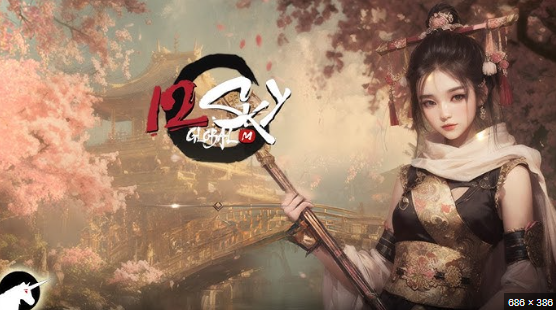
I. What Is 12Sky M Global?
At the most basic level, 12sky m global is a mobile MMORPG published by NTORI and presented as a global martial-arts MMO built around large-scale conflict. The official Google Play page describes it as “Korea’s martial arts MMORPG” and ties that identity directly to real-time global combat. It is not a spinoff puzzle game, not a card battler, and not a lightweight idle title wearing an MMO costume. It is very intentionally trying to sell the fantasy of stepping into a war-torn martial world and climbing through combat, faction rivalry, and repeated progression systems.
The core fantasy is one of national allegiance more than personal wandering. Yes, you still build your own character and progress your own account, but the framing is bigger than that. The official description repeatedly uses nation-level language: defend your nation’s honor, shape the nation’s fate, fight in national wars, and compete through faction conflicts. That means your “team” is not just a five-man party or a casual guild. The bigger identity layer is the side you belong to in the broader war.
That matters because it changes how the game feels. In a lot of modern mobile MMOs, factions are mostly cosmetic. They give you a different banner color and then disappear into the background. Here, the official feature list treats them as a real pillar of the gameplay loop. The app page highlights guild and faction systems as one of the main selling points, and it places national wars and faction conflicts right beside raids and world dungeons as core battle content. That tells you the game expects players to care about faction identity for the long haul, not just for the tutorial.
Feature-wise, the game is pretty direct. The official listing promises real-time combat against martial-arts masters worldwide, intense combat with flashy skill effects, national wars, faction conflicts, raids, world dungeons, a system that lets cash items be bought with in-game currency, and an auto-hunt feature for easier grinding. If you strip away the marketing language, the structure is obvious: this is a grind-heavy war MMO with both PvE and PvP pressure, convenience mechanics, and a player economy layer that tries to keep spenders and grinders connected.
From a player perspective, the easiest way to understand 12sky m global is this: it is a faction-based martial-arts MMORPG where your progression is supposed to feed directly into bigger conflict. You level to fight better, you gear to fight better, you auto-hunt to keep growing, and then all of that power eventually gets tested in raids, faction clashes, and national warfare. If that loop sounds appealing, you are already the target audience. If not, the game is probably not going to magically become something else later.
II. Download, Platforms, and Requirements
For most players, the main entry point is Android. The official Google Play listing for 12SKY M GLOBAL is live and currently describes the game as available on Android and Windows through Google Play’s PC support. The listing shows the game was updated on March 27, 2026, and it explicitly links to the official website at 12skymglobal.ntori.com for the latest information.
The Android hardware requirements are also stated directly on the official listing, which is useful because a lot of mobile MMORPGs bury this stuff until you install and get burned by performance. According to the Play page, the minimum device requirement is Galaxy S9 with Android 7.2, while the recommended device is Galaxy S20. That gives you a pretty fair idea of what sort of baseline the developers expect. It is not an ultra-light game built for ancient low-end devices, but it is also not pretending you need a flagship from this week to boot it up.
If you want APK-style alternatives, there are non-mainland third-party discovery pages that mirror or catalog the app. Softonic’s Android app page lists version 21, says the latest update was in early April 2026 on its mirror page, and lists the available languages there as English and Korean. It also presents both APK and Google Play as download options. AppBrain similarly tracks the app and lists version 21, a package size around 110 MB, and a latest Play update date of March 27, 2026. Those are useful for reference, but the official Play Store remains the safest default source whenever your region allows it.
Language-wise, the clearest directly surfaced evidence in current indexing is that Softonic lists English and Korean as available languages for the Android package. Since the global service is being positioned as a global battle product and the Play listing itself is fully presented in English, that lines up with what most players would expect. Still, the easiest practical takeaway is that English support is clearly present and Korean is also recognized in at least one current app catalog entry.
If you prefer playing on PC, you have two straightforward emulator routes: BlueStacks and LDPlayer both have pages specifically for 12SKY M GLOBAL. BlueStacks pitches the usual benefits like larger-screen play, keyboard and mouse controls, and smoother performance on PC or Mac. LDPlayer does the same and goes further by listing a recommended setup that includes Windows 10 64-bit or later, OpenGL 4.x, an 8th-gen Intel Core i3-class CPU or better, a GTX 1050 Ti-class GPU or higher, 8 GB of RAM, and VT enabled. That is not the game’s native requirement from the developer, but it is useful if you are planning to live on emulator rather than just test the game casually.
So from a practical player standpoint, the platform story is easy. If you want the most direct path, use Google Play on Android. If you want bigger-screen comfort, use BlueStacks or LDPlayer. If you want to verify official support information, use the official site and support portal linked directly from the Play page. That is the cleanest setup and the one least likely to waste your time.
III. Martial Arts Action and Combat System
The combat pitch for 12sky m global is all about immediacy and impact. The official description says you face martial-arts masters from around the world in real-time combat and pairs that with “intense combat and satisfying impact.” That might sound like standard MMO marketing copy, but it still tells you something important: the game wants combat to feel active and flashy, not just statistical and passive.
Visual feedback is clearly part of the intended appeal. The official listing specifically mentions stunning skill animations, immersive martial arts action, and explosive combat effects. That matters because martial-arts MMOs live or die partly on feel. If your strikes look weak, if the effects are dull, or if every skill blends into every other skill, then even good systems start to feel flat. The developers clearly understand that, which is why “vibrant graphics and effects” sits beside the faction and dungeon systems as a major feature.
From a player perspective, the combat identity looks like it is trying to balance old-school grinding with more modern visual punch. This is not the kind of game that hides its grind. It openly gives you auto-hunt, repeated battlefields, and endless war content, so it knows you will be fighting a lot. The answer to that is not to reduce combat volume. The answer is to make every class and every skill line feel like it still has enough visual and mechanical payoff to survive long-term repetition. That is what the official presentation is aiming for.
Weapon and style identity are also part of the broader TwelveSky formula, even though the current surfaced global store page does not break down every weapon line in detail. The older TwelveskyM global listing and franchise descriptions consistently frame the game as one where players enhance weapons and armor and master martial-art skills to dominate opponents. That older global mobile description still reinforces the basic class fantasy: this is a war game where your weapon progression and martial techniques are central to how your character feels.
As a player, the most useful way to think about the combat is this: it is built to support two moods at once. One is manual, active play where flashy skills, timing, positioning, and fighting other players actually matter. The other is long-term grind play where combat has to be readable and satisfying enough to survive repeated farming sessions. That combination is exactly why the game can support both national warfare and auto-hunt without feeling like those systems belong to totally different products.
The result is a martial-arts MMO where spectacle is not optional. It is part of the retention strategy. If you are going to ask players to grind endlessly, fight for faction pride, and loop battle content for months, the hits need to feel good. The official feature set makes it clear the developers know that.
IV. Nations, Factions, and Guilds
One of the biggest reasons 12sky m global does not just feel like another generic mobile MMORPG is the nation and faction structure. The official listing does not present faction choice as a flavor decision. It presents it as the heart of the game’s war fantasy. You are not just entering a world and freelancing. You are choosing a side, defending your nation’s honor, and trying to lead that nation to victory.
That choice matters because it shapes your social identity immediately. A lot of MMORPGs talk about guilds first and factions second. 12SKY M GLOBAL flips that emotional order. The official app page highlights the guild and faction system and explicitly says players should collaborate and compete with allies to defend their nation’s honor. That means your guild exists inside a larger war framework. You are not just building a friend group. You are building a coordinated piece of a bigger machine.
For players who like clear-side conflict, that is a huge plus. Faction games create stronger stories naturally because enemies are easier to define, rivalries last longer, and random world encounters feel more meaningful when they connect back to a larger struggle. The game’s official marketing knows this and leans into it hard. The line “your choice shapes the nation’s fate” is not subtle. It is trying to make your initial allegiance feel emotionally important from the start.
Guilds matter too, of course. The official listing frames them as part of the collaboration layer that helps players defend faction pride and compete more effectively. In practical terms, that means guilds are likely where the game’s repeated war and raid content actually becomes sustainable. A faction gives you identity, but a guild gives you organization. You need both for a game like this to feel alive for more than the first few weeks.
The broader faction conflict loop is also supported by the content structure. Since the game explicitly lists national wars, faction conflicts, raids, and world dungeons as major battlefields, the faction system is not ornamental. It feeds the actual content menu. That is what makes it matter. The game is designed so that your side choice connects directly to what you spend time doing later.
As a player, that means the smartest early mindset is not “which side looks coolest?” It is “which side do I want to live with?” In faction-heavy games, your long-term experience is shaped as much by community, guild structure, and server balance as by pure mechanics. Picking a side is part fantasy choice, part practical social choice. And in 12sky m global, that seems to be exactly how it is supposed to feel.
V. Game Modes and “Endless” Content
The official description of 12sky m global makes one promise very clearly: you are not going to run out of battle content quickly. It literally calls the game’s PvE and PvP offering “endless battle content” and then names the major pillars: national wars, faction conflicts, raids, and world dungeons. That is the core loop right there.
Each of those modes matters for a different reason. National wars and faction conflicts are the obvious identity content. They are where the game’s larger “global showdown” fantasy actually cashes out. Raids and world dungeons, meanwhile, are the PvE backbone that keeps progression moving and gives players a reason to group up beyond just PvP revenge or national pride. By naming both, the official listing is telling you this is not a pure war simulator. It wants a mixed PvE/PvP lifestyle.
There is also a meaningful difference between open-field grinding and instanced challenge content. The official site’s update list references things like Instance Dungeon: Infinite Onslaught, which shows the game is actively building out private challenge content as part of its ongoing update structure. At the same time, the app page keeps emphasizing world dungeons and faction battlefields, which are more public-facing and socially competitive. So the game’s long-term structure looks split between shared contested space and more controlled dungeon-style content.
That is a smart structure for a grind-heavy MMORPG because it lets different kinds of players stay engaged. Some players live for large conflict. Some prefer repetitive efficient farming. Some want party raids. Some want private progression spaces where they can optimize without getting jumped constantly. A content model that supports all of those is much healthier than one that bets everything on only open PvP or only scripted dungeon loops.
The “endless” part, though, is really about progression repetition. This is not a short-burst seasonal action game. It is a long-lane MMORPG. You are expected to repeat content, revisit battlefields, regrind resources, and slowly scale up in strength. That is why the battle content is framed as endless rather than as a one-and-done feature tour. The developers are telling you upfront that repeated conflict is the lifestyle here.
As a player, I would read that as both a promise and a warning. If you enjoy long-term repeated growth through wars, raids, and grinding, the content structure is probably exactly what you want. If you hate repetition and want a more handcrafted narrative MMO, the same system will probably wear on you quickly. The game is pretty honest about which kind of experience it is offering.
VI. Auto-Hunt, AFK, and Progression
The auto-hunt system is one of the most important quality-of-life features in 12sky m global, and the developers know it. They highlight it directly on the store page as a “convenient auto-hunt system” that lets players grow and fight effortlessly. That means two things immediately. First, the game expects a lot of repetitive combat. Second, it expects players to want a way to handle part of that repetition without manually steering every fight.
From a player perspective, that makes perfect sense. A game built around endless war content, repeated dungeons, long-term faction conflict, and constant power growth is naturally going to include grind-heavy stretches. Auto-hunt is the bridge between ambition and player fatigue. It lets the game stay grindy without demanding that every single hour of farming be fully manual.
That said, auto systems always create a tension between convenience and engagement. If you use auto-hunt for everything, the game can start feeling like background software instead of a martial-arts war MMO. If you ignore auto-hunt entirely, you may just burn yourself out faster than the systems were designed for. The healthier approach is usually mixed play: use auto-hunt for safe repetitive farming, but switch back to manual play for harder PvE, faction clashes, raids, and moments where actual player skill or awareness matter more. That is not an official instruction, just the most sensible way to approach a game structured like this.
The power-growth side of this is huge. Even though the current official page does not publish a clean “100K to 1M power” roadmap, the entire feature stack tells you the intended scaling model is very long-range. Endless battle content, auto-hunt, guild/faction systems, dungeons, cash-item trading, and repeated updates all point toward an MMO where power growth is measured over long periods, not over one dramatic weekend. The presence of update systems like Infusion / Disassemble, instance dungeons, back decorations, and other expanding progression layers on the official site reinforces that the game is meant to keep adding ways to push your stats over time.
So the real question is not whether you can grow stronger. You obviously can. The real question is how much of that climb you want to do actively. Auto-hunt makes the climb more sustainable, but it also means the most successful players are usually the ones who understand when to let convenience work for them and when to stop being passive and actually play the game.
If you come in expecting a pure AFK simulator, you will miss the point. If you come in expecting no automation at all, you will also misunderstand the product. 12sky m global sits in that middle zone where auto systems support the grind, but the larger appeal still depends on faction identity, PvP, and combat fantasy.
VII. Free-to-Play, Cash Shop, and Monetization
The monetization pitch for 12sky m global is one of the most interesting things about it because the official page does not try to hide the cash shop. Instead, it leads with a very specific promise: cash items can be bought with in-game currency. That is not a small bullet point buried in a FAQ. It is one of the headline features right on the Play listing.
That matters a lot because it changes the usual F2P conversation. In many mobile MMORPGs, cash items exist in a separate world from normal players unless you pay. Here, the official description is trying to reassure players that effort and dedication can still translate into premium-access power or convenience because the economy allows those items to circulate through in-game currency. If that system works well in practice, it is a genuinely meaningful F2P-friendly feature.
Now, does that automatically make the game perfectly balanced for F2P? Of course not. A tradable premium economy can still heavily favor heavy spenders, especially early on, because they can inject high-value goods into the market and shape prices. But it does create a path for grinders, traders, and patient players to catch up more realistically than in a hard-separated shop model. That is the real value of the system.
The player-review side of the older TwelveskyM App Store page is actually useful context here. One review says the game absolutely can be pay-to-win at the very top, but also claims that patient players who farm, barter, and sell can still become strong without spending heavily, especially once item values settle over time. That is not official marketing, so I would not treat it as a guaranteed design promise, but it does line up with the logic of the “buy cash items with in-game currency” feature.
Typical cash shop value in a game like this usually lands in the usual MMO places: convenience, acceleration, upgrade-related items, and gear-adjacent progression pressure. The current official listing does not enumerate every cash shop item one by one, but because it centers the monetization discussion on cash items becoming accessible through in-game currency, it is fair to say the developers understand the shop affects meaningful progression rather than purely cosmetic fluff.
So as a player, I would call the game potentially more F2P-tolerable than many mobile MMORPGs, but not magically divorced from power monetization. The key difference is that the economy seems designed to let time and trading matter. That is a big improvement over pure swipe walls, even if it does not erase them completely.
VIII. Beginner’s Guide: Starting Strong
If you are starting 12sky m global fresh, the smartest first move is to treat your opening hours like setup, not like a race to look impressive immediately. This is a faction MMORPG with long-term systems, not a sprint game. The first big choice is your nation or faction, and since the game frames that choice as central to your future experience, it is worth taking seriously instead of clicking randomly. Your side affects the social environment you will grow into, and in faction games that can shape your entire long-term experience.
After that, the beginner focus should be simple: follow the early quest path, learn the combat feel, and unlock the game’s convenience systems without overcomplicating your build. The official listing does not spell out a beginner quest chain step by step, but it makes clear the game wants you to grow through battle content, faction cooperation, and repeated fighting. That means the early game is likely about getting comfortable with your class identity, understanding the battle rhythm, and setting up a grindable routine rather than trying to theorycraft perfect late-game optimization on day one.
The first meaningful power spikes in a game like this usually come from a few obvious sources: weapon and armor upgrades, skill progression, and opening up systems like auto-hunt so you can sustain farming more efficiently. That assumption is reinforced by the older TwelveskyM description, which specifically says players enhance weapons and armor and master martial art skills to dominate faction wars. Even though that listing is for the older global mobile version, it reflects the same franchise logic clearly enough to be useful for understanding the progression feel.
The biggest beginner mistake is probably trying to play the game like a pure single-player MMO and ignoring the faction and guild layer. The official page is too explicit about guild/faction value for that to be a smart long-term choice. Even if you prefer solo grinding early, you should still position yourself to benefit from the social side before the game starts expecting you to care about larger conflicts and shared content.
The second beginner mistake is either overusing or underusing auto-hunt. If you let the game play itself all the time, you may never learn what your class actually feels like. If you refuse to use auto-hunt at all, you may just burn energy on content the game clearly expects you to semi-automate. Balance is the key here. Use convenience when the content is routine. Stay active when the content matters.
So if I were explaining the early game player-to-player, I’d put it like this: pick your side carefully, get through the first quests cleanly, focus on weapon and skill progress, join the social structure before you “need” it, and let auto-hunt support your grind instead of replacing your understanding. That is the safest and smartest way to start strong.
IX. Builds, Stats, and Power Guide
The current surfaced official materials for 12sky m global do not publish a full stat-by-stat build guide on the public front page, so it would be dishonest to pretend there is one official “best stat build” confirmed in the sources I checked. What is clear is that the game’s broader progression is built around layered power growth through combat, skills, gear systems, and later update systems like Infusion / Disassemble, instance dungeons, and cosmetic-stat style additions like back decorations. That means power is not coming from one single menu. It is a stack of systems.
The official site’s latest update section is especially useful here because it shows what kind of long-term power levers the game keeps adding. Infusion / Disassemble is described as a system that lets you increase stats that cannot be enhanced through normal enhancement, which strongly suggests the developers want deeper optimization layers beyond the basic gear-upgrade loop. That is exactly the kind of system that eventually separates casual accounts from serious ones.
The site also highlights things like Instance Dungeon: Infinite Onslaught and new equipment-style additions such as Wing of Death Chest and head decorations, which suggests the game continues to add both content-based and item-based routes to power. In practical terms, reaching something like “1M power” in a game like this is not about one lucky drop. It is about compounding upgrades across gear, dungeon rewards, stats, side systems, and repeated farming efficiency.
Because the public official sources do not currently spell out class-by-class stat priority in a clean readable form, the safest responsible advice is broad rather than hyper-specific. Prioritize whatever keeps your main combat loop strongest first: weapon progression, skill usability, and the upgrade systems that give consistent stat returns rather than random side vanity. Once your main offensive and defensive growth is stable, then branch into the more layered systems like infusion, special dungeons, and side gear slots. That is inference from the game’s visible progression structure, not a copied official build order. It is still the most grounded way to think about the game.
As for power-boost systems like pets, mounts, wings, and similar MMORPG staples, the official site clearly surfaces back decoration content and item-chest additions, but the public lines I checked do not fully map every side-progression category one by one. So the safest way to frame this is that the game definitely has layered itemization and visual-progression systems that interact with power, and later updates continue adding to those systems over time.
If you are trying to build efficiently as a player, the real rule is simple: do not spread your upgrade effort too thin across every shiny system the second it appears. Core gear progression, skill strength, and efficient farming always matter first. Optional layers become more valuable once your main loop is already strong. In a long-term MMORPG, that order matters a lot.
X. Graphics, Performance, and Settings
Visually, 12sky m global is trying to sell authentic martial-arts fantasy more than cutting-edge realism. The official page leans on phrases like authentic martial arts visuals, vibrant graphics and effects, and explosive combat effects. That gives you a pretty accurate expectation: this is not a photorealistic prestige MMO. It is a stylized martial-arts mobile MMORPG whose visual job is to make combat look energetic and readable.
Performance-wise, the clearest official guidance is still the device requirement section on Google Play: minimum Galaxy S9 / Android 7.2, recommended Galaxy S20. That tells you the game expects at least a decent mid-range baseline for a smooth experience, especially if a lot of flashy war content is happening on screen at once. On emulator, LDPlayer’s recommended setup is much stronger than the raw phone minimum, which is normal because emulators add overhead.
The support portal also reinforces that technical issues are something the developers actively expect players to need help with. The official FAQ includes categories for installation failure, minimum specifications of mobile device, update failure, abnormal termination, and push-notification settings. That is useful because it tells you there is at least a dedicated support structure when something goes wrong, rather than leaving players to guess in the dark.
The official site’s news feed also shows recent notices about Google login failure, server maintenance, and even a Virtual Android notice, which suggests the team actively communicates around technical or access-related issues through the official website. Again, that does not guarantee every problem gets solved instantly, but it does mean this is not a silent service where technical problems vanish into nowhere.
For practical settings advice, the best player logic is straightforward. If you are on a mid-range device, prioritize stability over max visuals, especially during war-heavy or world-dungeon sessions. If you are on a higher-end phone or a strong emulator setup, you can push visuals harder, but you still want to watch thermals and long-session stability because faction MMOs often turn “fine performance” into “why is my phone dying” during large-scale battles. That is reasoned advice based on the game’s content type and stated requirements.
So visually, the game looks like what it wants to be. And technically, it at least provides enough requirement and support info that players can make informed choices before diving in. That already puts it ahead of plenty of live-service mobile MMOs that expect players to troubleshoot blindly.
XI. Events, Updates, and Patch Notes
One of the best signs that 12sky m global is being run as a live service rather than abandoned after launch is the official site itself. The homepage currently surfaces News, Event, Game Guide, FAQ, and Customer center, and the visible news feed includes items such as 2026/03/31 Server maintenance, Google login failure, and Virtual Android notices. That is exactly the kind of structure you want to see if you are planning to play a game long term.
The Google Play page also gives a clean anchor point for the global timeline by stating GRAND OPENING on November 13th Thursday, 12:00 KST. That is the clearest official launch marker visible in the current official global materials I checked. The app page itself was then updated again on March 27, 2026, which shows the service did not just open and freeze.
The official website’s latest update block gives a good snapshot of how content is being expanded. At the moment, the surfaced items include Instance Dungeon: Infinite Onslaught, Infusion / Disassemble, Head decoration (Mask), and Wing of Death Chest. Whether every single one of those is a meta-defining content drop is another question, but together they show a clear update pattern: new dungeon content, new stat-enhancement systems, and new item or appearance layers that tie back into progression.
Maintenance communication also appears straightforward. The official site shows server-maintenance news entries, and the official Facebook page search snippet includes a visible server maintenance notice example saying TwelveskyM would be down for routine maintenance during a stated UTC window. That means the service uses at least both the official website and Facebook page to communicate operational issues and downtime.
From a player perspective, that matters more than people admit. A grind-heavy MMO lives or dies partly on whether players can tell what is happening with the service. If maintenance, login problems, or content updates are communicated clearly, players are much more forgiving. If not, frustration builds fast. The structure here looks reasonably healthy.
So if you plan to stick with 12sky m global, the smart habit is to check the official site first, then Facebook for shorter notice-style updates, and only after that lean on third-party chatter. The official channels already expose most of what you need to know.
XII. Community, Support, and Official Links
The official support and community structure for 12sky m global is actually one of the easier parts of the game to map. The Google Play page links directly to the official website at 12skymglobal.ntori.com, lists the support email ntoriglobal@gmail.com, and links to the official privacy-policy page. The website itself then exposes News, Event, Game Guide, FAQ, and Customer center, which gives you a clean official hub for nearly everything important.
The support portal is also properly segmented, which is a good sign. The official FAQ page includes categories for Payment, Account, and Technical Issue, with examples such as How to Refund Items, Google Payment Issue, Account Loss, Installation Failure, Minimum Specifications of Mobile Device, Update Failure, and Abnormal Termination. That is a much better support structure than a single vague contact page.
For social and community-facing updates, the official Facebook page listed in search results is TwelveskyM, which is described as the Twelvesky Mobile Global Service Official Page. The surfaced Facebook snippets also show maintenance notices being posted there, which makes it a practical follow if you want lighter update reminders without checking the main site constantly.
As for where players can find builds, guides, and gameplay videos, the official site’s Game Guide section is your first stop for sanctioned information, while YouTube gameplay videos and emulator pages are useful for practical visual previews. The current search results include gameplay videos referencing the official site and global service, and BlueStacks/LDPlayer both provide lightweight onboarding for PC play. That is not the same thing as a high-end theorycrafting wiki, but it is enough to get a new player moving in the right direction.
If I were advising a new player where to look first, the order would be simple. Use the official site for news and guides, the FAQ portal for account or payment issues, the Facebook page for maintenance reminders, and YouTube or emulator pages for visual walkthrough help if you are still deciding whether the game’s feel matches what you want. That gives you an official-first information flow without leaving you stranded when you want more practical player-facing content.
At the end of the day, 12sky m global is pretty honest about what it wants to be. It is a mobile martial-arts MMORPG built around real-time combat, long-term progression, faction loyalty, repeated war content, and enough convenience systems to make that grind sustainable. The official Google Play page, official website, and support portal all reinforce the same picture: this is a nation-vs-nation combat MMO with raids, world dungeons, guilds, auto-hunt, and a monetization model that at least tries to keep in-game effort relevant through tradable cash items.
That means the game’s biggest strengths are also the things that will define whether you personally enjoy it. If you like faction conflict, long grinds, repeated growth systems, and the feeling of becoming stronger inside a live martial-arts battlefield, the game has a very clear hook. If you hate repetition, do not care about national PvP identity, or want a more guided story-first MMO, it is probably going to feel harsher and more old-school than what you want.