Black Beacon Tier List & Starter Guide (Player’s Take): Who to Reroll, Who to Build, and How to Actually Fight Smart
Black Beacon is a mobile action RPG that mixes myth, literature, and sci-fi into one big “what the heck is going on and why do I love it?” package. You play as the Seer, basically the head librarian of the Library of Babel, and you get pulled into a chain of anomalies that rewrite reality like it’s a glitching book.
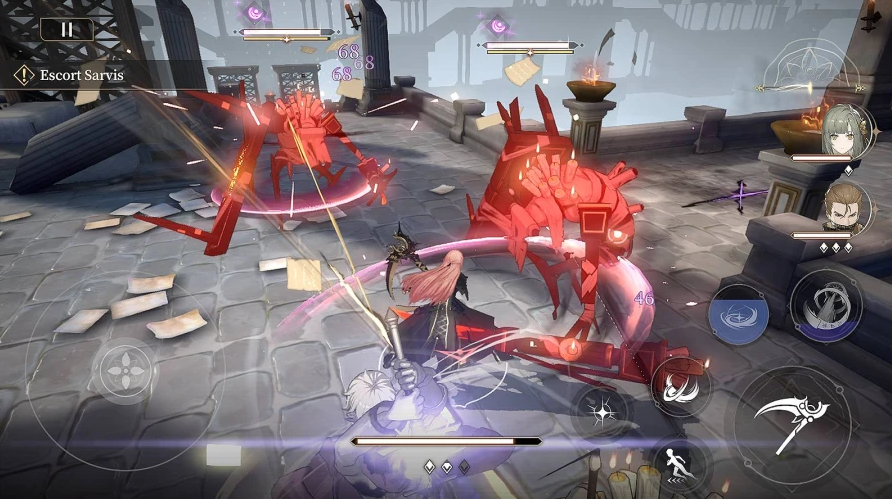
Gameplay-wise, it’s real-time, combo-driven, and built around running a team of up to three characters in fights—swap in, swap out, keep pressure, build energy, dump skills, repeat.
I. Game Setting and Story
A. The Library of Babel, the Seer, and anomalies
The story hook is genuinely one of the strongest parts. You arrive at the Library of Babel and get wrapped up in anomalies as the Seer / head librarian figure, pulled into conflicts that ripple across timelines and worlds.
If you like lore-heavy games where the setting isn’t just “fantasy kingdom #47,” Babel gives you that “every chapter reveals a bigger conspiracy” vibe.
B. Mythic sci-fi premise and alternate-world themes
It leans hard into “myths and legends colliding with modern/alt-Earth reality,” and it does it with a more literary flavor than most gachas.
C. How story unlocks modes and resources
Story progression wasn’t just narrative—it unlocked:
boss rematches (Echoes of the Past)
roguelike-style / challenge modes (Tome of Fate)
timed combat challenges (Infinite Multiverse)
and base-building style features (Babel Tower)
So if you were ever stuck thinking “where do I even farm X?” the answer was often: push story until the mode opens.
II. Combat System Overview (How the game actually wants you to play)
A. Real-time combat + swapping + combo rhythm
Combat is real-time. You have:
basic attack
Skill 1
Skill 2
ultimate
passive/combo interactions
The important part: you’re not meant to camp one character forever. Swapping near enemies triggers Entrance Attacks and speeds up Vigor charging, so rotating characters is literally part of your DPS plan.
B. Vigor generation (the “why can’t I press my skills” answer)
Skills use Vigor, and there’s a built-in “charge chain”:
basic attacks charge Skill 1
Skill 1 charges Skill 2
Skill 2 + basics help charge ultimate
It sounds restrictive on paper, but it creates a pretty satisfying rhythm once you get it:
basic → skill → skill → swap → entrance hit → repeat.
Then there’s Combo Burst mode: when the Combo Burst meter is full, you can spam skills without charging Vigor normally (within its rules), which is where your carry unit goes full anime for a moment.
C. Interrupting “Killing Moves” (don’t eat the yellow flash)
Enemies have “Killing Moves” signaled by a yellow flash/glow. If you just stand there and take it, you’ll feel it. The game clearly teaches you that you can interrupt these by:
using a skill at the last moment, or
doing a Heavy Strike (hold attack) at the last moment
If you remember only one combat tip from this whole guide, remember this:
Yellow flash = stop hitting like a caveman and interrupt properly.
It turns scary enemies into free openings.
III. Elements and Status Effects (aka “Why my damage suddenly popped off”)
A. The five elements and their anomalies
Black Beacon’s elements aren’t just flavor—they apply “elemental anomalies” when the enemy’s anomaly meter fills, and those anomalies do specific things.
Here’s the player-friendly version:
Fire → Burn: damage over time (based on a percentage of character HP, per Game8’s breakdown).
Water → Stasis: brief freeze / movement lock.
Thunder → Electrocuted: extra thunder strikes when hit.
Light → Glare: small tick, then bigger fixed damage when it ends.
Dark → Corrosion: delayed damage based on damage received during the state (and can trigger instantly if the enemy HP is low enough).
B. Elemental Overload (the “combo” between elements)
There’s also Elemental Overload, triggered by inflicting two anomalies in quick succession, which creates a burst moment.
This is where team-building starts feeling like a puzzle: not “three strong units,” but “three units that stack effects cleanly.”
C. Matching elements for bosses vs mob clear
Game8 explicitly points out that using the right element matters more against bosses with large HP pools, because exploiting weaknesses boosts overall output.
Player translation:
For mobs: AoE + speed > perfect element match
For bosses: element match + burst windows > everything
IV. Character Classes (Roles) and why your team feels bad without balance
Black Beacon uses three “role classes”:
Destruction: damage-focused
Breaker: break/utility focus (team structure uses these to form comps)
Assist: buffs, shields, healing support
And importantly: the game says these are guidelines, not strict rules—some characters flex outside their label depending on how you play and rotate.
If your team feels scuffed, it’s usually because you tried to run:
3 Destruction (you die)
or 3 “supports” (you can’t kill)
or 2 units that fight for the same field time (rotation clunky)
A stable default team structure is:
1 main DPS (Destruction)
1 breaker/control (Breaker or utility kit)
1 assist (shield/heal/buff)
V. Best Characters by Tier (What players kept calling “meta”)
This is where we need to be honest: different tier lists disagreed, partly because they were updated at different times and the game’s service ended late 2025.
So I’m going to give you:
a practical “last-known-meta” tier list based on multiple popular lists,
what each unit is good at in plain player language,
and who’s worth prioritizing early.
A. S-tier characters: Florence, Li Chi, Hephae, Zero, Qing, Yuli
Pocket Gamer’s last update placed these six at the top and explicitly said they were “in meta” near the end of service.
Florence (S-tier carry, “burst rotation queen”)
Florence is described as a top unit because she has strong burst damage and a rotation that’s manageable once you learn her cooldown flow—especially when you’re swapping characters the way the game wants.
Player advice:
Florence is the type of carry you build when you want your damage to be reliable, not just flashy. She’s also a great “anchor” for early team planning because you can build supports around her and feel the difference immediately.
Li Chi (S-tier high-skill DPS, “boss shredder if you don’t mess up”)
Pocket Gamer’s notes basically say: Li Chi is harder to learn, but once mastered, the DPS is nasty—especially against bosses—though you need to watch HP and play clean.
Player advice:
Li Chi is for players who enjoy mastering a kit. If you’re the kind of player who loves “lab time,” Li Chi rewards it.
Hephae (S-tier utility DPS/support hybrid, “team amplifier”)
Hephae shows up in S-tier on Pocket Gamer.
Even older reroll discussions described her as extremely valuable because she supports Fire teams and improves damage resistance while still contributing.
Player advice:
Hephae is one of those “your whole team feels better” characters. Not always the highest personal DPS, but she makes your carry do carry things more consistently.
Zero (S-tier starter who refuses to fall off)
This is one of my favorite “gacha moments”: the starting character is actually good.
Pocket Gamer highlights Zero as your starter and still strong because:
she deals solid damage,
she’s easy to upgrade with duplicates/rewards,
and she’s great for learning combos and flow.
Player advice:
If you didn’t have a stacked roster, Zero was the “no excuses” unit—build her and move on.
Qing (S-tier meta pick)
Qing is placed as a top meta character in Pocket Gamer’s list.
Some gacha-banner explanations also highlight Qing as a featured unit in early banner cycles.
Player advice:
Qing is the type of unit tier lists like because she fits cleanly into “good rotation, good output” teams.
Yuli (S-tier “high impact”)
Yuli is consistently referenced as top-tier in multiple lists (Pocket Gamer’s S tier and Pocket Tactics’ SS tier).
Player advice:
If you were the kind of player who wanted a unit that stayed relevant while the meta shifted, Yuli was often treated like one of the safest “build now” choices.
B. Strong support/hybrid picks like Ninsar and Azi (and why they make teams stable)
Even if you’re allergic to “support characters,” Black Beacon rewards stability because fights are real-time and mistakes happen.
Ninsar (commonly rated high for team value)
Ninsar sits high on Pocket Tactics (S tier) and appears as a strong pick in Pocket Gamer (A tier).
That split usually means: she was strong, but some lists valued pure DPS more at the end.
Player advice:
Ninsar is the kind of unit that makes your clears consistent—especially if you’re pushing harder modes and don’t want to reset 12 times.
Azi (often placed very high on some lists)
Pocket Tactics places Azi in SS tier, which is wild for a “support-like” unit.
Game8 also uses Azi as an Assist-class example and describes Assist units as providing buffs, shields, and healing.
Player advice:
If you like “I don’t die” teams, Azi is the kind of unit you slot in and suddenly your runs stop being stressful.
C. Lower-tier options and who to avoid early (or at least deprioritize)
Pocket Tactics’ older tier list puts characters like Ming and Xin at the bottom.
That doesn’t mean they’re unusable—just that they weren’t the best “first investment” when resources were tight.
Here’s the practical rule:
Early game: build what clears content now
Later: build favorites and niche picks if you want
Also worth noting: the character pool wasn’t massive compared to long-running gachas—so even “lower tier” units could clear story if you understood combat and didn’t ignore gear.
VI. Reroll and Starter Guide (How players approached the early account grind)
A. Best reroll targets
If you were rerolling during service, your top targets were typically:
Florence
Li Chi
Qing
Yuli
(and depending on your preference) Hephae for team utility
The logic:
get one “S-tier carry” so your account has a backbone
then build a balanced trio around them
B. Starter team recommendations (simple and effective)
If you wanted a sane early-game team, here are three templates:
1) “I want easy progression” team
Carry DPS: Florence / Qing
Utility/Breaker: whoever covers your weakness
Assist: Zero or a strong support pick
2) “I want boss damage” team
Carry DPS: Li Chi
Secondary DPS/Amplifier: Hephae
Assist/Utility: Zero or a stable support
3) “I hate dying” team
Carry DPS: Yuli / Florence
Support: Ninsar or Azi
Utility: a breaker/control style unit
C. What to prioritize first: DPS, support, or shield units?
If you’re new, you’ll want to say “DPS obviously.”
But real player answer:
One strong DPS first
Then one unit that prevents you from falling apart (shield/heal/buff)
Then build your third slot for your rotation (breaker/control or secondary DPS)
Because if you only build DPS, you get the classic action RPG problem:
You deal damage for 20 seconds, then die, then your DPS becomes zero.
VII. Team Building and Synergy (Where the game becomes “smart”)
A. Build around a burst DPS
Your carry DPS is the character you swap into when:
Combo Burst is ready
the boss is vulnerable
or you need to delete a pack quickly
Then your other two units exist to:
set up anomalies / Overload bursts
charge vigor cleanly
keep you alive
and create safe openings
B. Support + shield + carry = stability
The game’s own class breakdown makes it clear that Assist units help teams survive longer through buffs, shields, and healing.
So if you’re pushing harder content, “support slot” is not optional—it’s comfort, consistency, and fewer resets.
C. Budget/F2P comps vs investment-heavy comps
Budget comps usually lean on:
Zero (easy to upgrade, strong starter)
One solid DPS you pulled
One utility/support you can invest in slowly
Investment-heavy comps are the ones that stack:
perfect anomaly triggers
high burst windows
optimized skill order and swap timing
VIII. PvE and Bossing (How to clear without sweating)
A. Best PvE characters for bosses and wave clearing
Bossing cares about:
single-target burst
survival
interrupting Killing Moves
That’s why Li Chi (boss DPS), Florence (burst rotation), and stable supports keep showing up in “meta” discussions.
Wave clearing cares about:
AoE skill coverage
rotation speed
your ability to keep moving and grouping enemies
B. Single-target burst vs AoE farming choices
If you’re struggling with time limits or farming speed:
don’t just crank DPS stats
learn to use Combo Burst and swap for Entrance Attacks
That’s often a bigger DPS increase than any early upgrade.
C. Endgame scaling (gear + modes)
Endgame content was tied to modes like:
Infinite Multiverse (challenging timed missions with rewards like Rune Shards)
Babel Tower upgrades (farming Clarity and materials)
Explore modes like Tome of Fate and Infinite Multiverse
So your scaling path was basically:
story → unlock modes → farm resources → optimize gear.
IX. Progression and Upgrades (What to invest in first)
A. Character development, affinity, and cosmetics
Yes, there was an Affection system where you raise affection for rewards, typically by giving gifts and engaging with the social systems.
There were also costumes/outfits that changed a character’s appearance and had their own unlock process.
B. Gear: Ancient Marks (the “real power” system)
A lot of players treated Ancient Marks as the big progression wall, because marks contribute heavily to stats and optimization.
If you ever felt like:
“My character is leveled but still hits like a wet noodle,”
…it was probably your Marks.
C. Rune Shards and “what fuels pulls”
Rune Shards were a key currency, commonly earned through main quest missions and mode rewards.
The practical advice:
Push story early for first-clear rewards.
Unlock modes ASAP.
Then settle into a repeatable daily farm loop.
X. Platforms and Download Guide (Safe and simple)
A. Android and iOS availability
Black Beacon launched globally on April 10, 2025 on Android and iOS and was free-to-play.
B. Where to download safely
During service, the safest download path was always the official mobile storefronts (App Store / Google Play) and the official website listing.
C. Performance and play options (player reality)
Because the game is real-time and combo-driven, performance matters more than in turn-based gachas:
stable FPS makes dodges and interrupts consistent
input delay makes “Killing Move interrupts” harder
XI. Reviews and Community Reception (What players liked and what annoyed them)
A. Launch impressions
Game8’s review describes the game as fast-paced, combo-driven, emphasizing offensive momentum, and recognizes its strengths in visuals and presentation.
B. Community tier list trends
Tier lists from Pocket Gamer and Pocket Tactics show different “top picks” depending on update timing, but they both highlight a tight group of strong characters that formed the core meta discussion.
C. What players praised vs criticized
The EoS coverage notes community sentiment around:
potential and storytelling being strong
frustration about management, bugs, localization issues, and compensation disputes
XII. Meta Updates and Future Outlook (and the hard truth about server health)
A. Tier changes and reroll shifts across versions
Meta shifts were tied to updates and banners, and players frequently revisited tier lists as the game evolved.
B. “Future-proof” units (the ones people kept recommending)
Even with tier list disagreements, certain units stayed central in discussion:
Florence
Li Chi
Zero
Qing
Yuli
Units like that tend to be “future-proof” because they offer either:
consistent damage rotation, or
easy upgrade paths, or
stable team value.
C. End of service and server health discussions
Black Beacon announced EoS due to operational difficulties; development beyond version 1.3 would cease, and the global publisher would be unable to provide future updates and support.
Multiple major guides also explicitly noted service termination on December 31, 2025.
So if you’re reading in 2026, the “outlook” is less “future roadmap” and more:
what the game was at its best,
what the meta looked like near the end,
and what lessons it offered about action gacha design.
If you want the quick answer to “Who were the best characters in Black Beacon?” near the end of global service:
The most commonly repeated top-tier names in mainstream tier lists were Florence, Li Chi, Hephae, Zero, Qing, and Yuli.
Strong team stabilizers like Ninsar and especially Azi were ranked very highly in some lists, reflecting how valuable support/assist kits were for consistency.
The combat system rewarded players who mastered Vigor flow, character swapping, Combo Burst windows, and Killing Move interrupts.
If you want, tell me which two things you cared about most—bossing, wave farming, or “I want the safest team possible”—and I’ll give you three concrete teams using only the commonly listed roster (carry + breaker + assist), with:
element pairings for Overload,
swap order,
and a simple “upgrade priority list” so you don’t spread resources thin.