Teon: Revelation Guide: Classes, Trading, PvP, Progression, and What It’s Actually Like to Play
If you have been seeing more people search for Teon: Revelation lately, that honestly makes sense. It hits a bunch of popular MMORPG search angles at once: new-player curiosity, platform availability, APK and download interest, beginner guides, class questions, AFK progression talk, and the usual “is this actually worth trying?” launch-period buzz. Official store pages describe it as a fantasy MMORPG from Lakoo built around a war-torn world called Edin, where the creator-god Teon has departed, monsters have reawakened, and players are pushed to “forge your immortal legend.” The current live platform footprint is broad too: Google Play lists it for Android, the App Store lists it for iPhone and iPad, and Google Play Games on PC lists an official Windows PC version as well.
I. Introduction to Teon: Revelation
At the most basic level, Teon: Revelation is a fantasy MMORPG available on Android, iOS, and PC. The Android version is live on Google Play, the iOS version is live on the App Store, and Google Play Games on PC provides an official PC route on Windows with synced progress support through the Google ecosystem. The official website also says the game supports Mac, iOS, Android, and PC emulators, which makes the whole platform picture pretty flexible compared with games that stay locked to one store or one device type.
The core promise is pure MMORPG fantasy fuel. The official PC listing literally asks whether you will become “a savior or a conqueror,” and the website frames the world as a place where power, clans, castles, dungeon treasure, and personal decisions all matter. That tone is a big part of the game’s identity. It wants to feel like a world where you are not just clearing stages but carving out a place in a dangerous land. The official site’s messaging around “forge your legend,” “choose your style,” “trade freely,” and “claim power through clans and castles” all supports that reading.
The open-world angle is also a major part of the package. The website describes nearly 50 maps, with named regions including Oxvale, Dartford, Sandwood Desert, Land of Nature, Promise Island, and Maros. Each of those areas gets a brief lore hook: monster nests around Oxvale, tyranny and demon-knight fear in Dartford, a massive ant nest in the desert capital ruins, conflict between elves and orcs in the Land of Nature, sealed demonic danger on Promise Island, and a dark invasion overtaking Maros. For a fantasy MMO, that is exactly the right kind of world framing: enough lore to create atmosphere, but also obvious signals that these are places built for grinding, questing, bossing, and faction-style conflict.
Search interest around Teon: Revelation also makes sense because it intersects with several high-intent player questions. Some players want pure platform information: can I play on Android, iPhone, or PC? Some want starter help: what class should I pick, how do I level, where do I farm? Some are specifically attracted to APK access and alternative Android installation pages. Others are clearly here because the game promises things people still love in older-school MMORPGs, like free trade, open PvP, face-to-face trading, and a player-controlled market. Those aren’t tiny side features on the official site. They are front-and-center selling points.
As a player, that is probably the most useful first impression to keep in mind: Teon: Revelation is trying to sell freedom. Freedom in how you grow your character, freedom in where you explore, freedom in how you trade, freedom in whether you grind manually or lean on automation, and freedom in whether you live as a solo wanderer or go full clan-war gremlin. Whether the game fully delivers on all of that depends on how much you personally tolerate mobile-MMO systems, but the identity it is aiming for is very clear.
II. Gameplay Overview
The basic combat pitch in Teon: Revelation is real-time action combat with skill buttons, free movement, and big fantasy enemy encounters. Official and store descriptions talk about grabbing weapons, casting magic, battling in real time, and moving with 360-degree free movement. The official site specifically mentions “silky smooth gameplay” and a “user-friendly” control scheme, while third-party game summaries describe battles against dragons and dark creatures using either manual controls or assisted movement.
That 360-degree movement part is more important than it sounds. In a lot of lightweight mobile MMORPGs, movement is technically free but functionally narrow because everything is heavily guided. Here, the game is clearly trying to market mobility as part of the fun. The official site directly lists 360-degree free movement, and because the game also emphasizes large maps and open-world exploration, the movement system matters not just in combat but in how the whole world feels to travel through. If movement feels stiff, a game built around open maps and field farming gets old fast. If movement feels smooth enough, even repetitive grinding zones feel less dead.
The battle loop itself seems designed around a blend of active play and convenience play. On one hand, store pages present the game as an RPG where you cast skills, engage in combat, and shape your own build. On the other hand, the official site explicitly confirms automated combat and pathfinding, and third-party beginner guides describe an Assistance feature unlocked during the tutorial that can move and fight for you. That means the gameplay experience probably depends heavily on how you choose to engage with it. If you want to tap through fights and position manually, the game gives you that option. If you want to let the character handle routine questing or farming while you semi-AFK, it supports that too.
Monster encounters and PvE progression appear to be built around traditional MMORPG habits: kill monsters, complete quests, develop stats, improve equipment, and move through increasingly dangerous zones. Uptodown’s overview describes the game as an MMORPG where you develop your character’s attributes to fight stronger enemies and collect resources while uncovering the story, while LDCloud’s beginner guide says progression revolves heavily around hunting monsters and completing story-type quests. That tracks with the official site’s zone descriptions too, since nearly every region blurb includes monsters, dungeons, or dark threats that clearly exist to be farmed or challenged.
The open-world exploration angle is one of the stronger parts of the game’s pitch. The official website says the world is open for exploration with no restrictions “as long as the player is willing,” and it repeatedly frames Edin as a place of cities, forests, swamps, deserts, islands, dungeons, and contested lands. From a player’s point of view, that matters because open-world MMORPGs live or die on whether the world feels like a real place to move through instead of a set of disconnected feature menus. Even if the game still uses quest guidance and auto-pathing, the world presentation is trying to create a larger adventuring fantasy than a simple hub-and-instance mobile RPG.
So if I had to sum up the gameplay loop in plain language, I would put it like this: Teon: Revelation wants you to fight in real time, move around a large fantasy world, grow your hero through stat allocation and gear, farm monsters and quests for progression, and then eventually plug that power into trading, clan play, PvP, or social progression depending on what kind of player you are. That is a familiar formula, but the free-trade and open-conflict elements give it a slightly more old-school edge than some safer mobile MMOs.
III. Classes and Character Creation
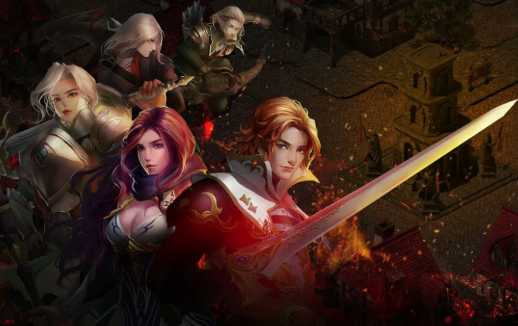
Character creation in Teon: Revelation seems to revolve around picking one of four classes or archetypes, customizing appearance, and then shaping progression through free attribute allocation instead of a totally locked stat path. The official website does not spell out a fully text-labeled class list in its parsed text, but it visually identifies four character archetypes as mage, elve, royal, and knight. Third-party descriptions line up closely with that: Uptodown says players can choose from an elf, a mage, a warrior, or a member of the royal family, while LDCloud’s beginner guide describes the four playable classes as Knights, Elves, Royals, and Mages.
That is actually a pretty nice spread for a launch-class lineup. You’ve got a frontline option in Knight, a ranged or archer-flavored nature class in Elf, a magic nuker in Mage, and a flexible leader/support-ish or battle hybrid in Royal. It is not a giant class list, but honestly that can be a good thing in a new MMORPG. Smaller class rosters are easier to learn, easier to balance, and easier for new players to understand. You do not have to spend two hours reading twenty subclasses just to figure out whether you want to tank or blow things up from range.
The Knight is the easiest class to recommend to most beginners based on the practical third-party guidance available. LDCloud’s guide explicitly says Knights are fearless frontliners built to absorb damage, support allies, and still deal decent damage, and it calls them the best beginner experience because of the lower learning curve and strong defense. That advice matches the general MMORPG logic too. When a game is new and you do not fully understand enemy behavior, damage windows, or gearing paths, playing the durable class is usually a smart move.
The Elf looks like the ranged finesse option. LDCloud describes Elves as nature-based archers with elemental magic and strong ranged attacks, but also warns that they need better positioning and timing to be deadly. That sounds like the class for players who want safer distance than a melee class but still enjoy active positioning and timing instead of just face-tanking things. From a player perspective, this is the kind of class that often ends up feeling great in solo progression once you understand enemy spacing, because ranged classes usually make grinding less painful.
The Mage is exactly what you expect: explosive magical damage with lower defense and a bigger punishment for bad positioning. LDCloud’s description of Mages as arcane damage dealers who hit hard but die faster if they get caught too close is basically the classic caster fantasy. If you like big skill effects and magical burst, this is probably the most immediately attractive class. But it is also the class I would warn brand-new players about if they hate dying. Glass-cannon classes always look amazing in trailers and much more stressful in actual field farming when your gear is bad.
The Royal is the most unusual archetype in the four-class setup. LDCloud frames Royals as natural leaders who support teams while still contributing offensively, and its stat guidance leans into Intelligence, Wisdom, and Charisma rather than raw melee bruiser stats. That makes Royal sound like a hybrid class, or at least the closest thing the current class setup has to a party-amplifying flexible role. As a player, I would not call Royal the easiest starter unless you specifically enjoy semi-supportive or stat-juggling roles. But I can absolutely see it being appealing for people who like more unusual builds.
The stat system is one of the biggest class-related hooks in the game. The official site says players can freely allocate base attributes and pursue different growth paths, while the beginner guide gives a concrete example stat spread for each class: Strength and Constitution for Knights, Dexterity-focused builds for Elves, Intelligence and Wisdom for Mages, and a mixed Int/Wis/Charisma setup for Royals. Whether those exact distributions remain optimal forever is another question, but the important thing is that the game clearly wants class progression to feel flexible rather than purely predetermined.
For beginners, my simple read would be this:
Pick Knight if you want the safest, easiest, lowest-stress start.
Pick Elf if you like ranged pressure and smoother solo gameplay.
Pick Mage if you want damage and do not mind being punished for mistakes.
Pick Royal if you enjoy hybrid, support-leaning, or team-value play and want something a little less straightforward.
IV. World, Story, and Lore
The lore of Teon: Revelation is built around Edin, a dark fantasy land tied to a creator-god named Teon. The official site says that after Teon abandoned the Land of Edin, divine creations were mostly destroyed, darkness persisted in the shadows, monsters re-emerged, and war and tyranny pushed the whole continent deeper into chaos. The PC and mobile store descriptions say something similar in a more compressed form: Teon departed, darkness fell, monsters awoke, evil forces rose, and a divine oracle appeared as the future approached.
That setup is classic MMORPG dark-fantasy material, but it works. You have gods, ruin, monsters, ambition, chaos, and a world unstable enough that individual adventurers can matter. The official site goes a little further by naming Attila II, who usurped the throne and ended the decline of the Arthurian Dynasty but failed to bring peace, instead overseeing endless war and deeper instability. It also mentions clans rising as new powers, castles representing wealth and authority, and treasure-filled dungeons becoming contested prizes among the strong. That gives the world a useful political edge instead of making it only about random monster outbreaks.
The revelation theme itself is tied to the game’s oracle language and “savior or conqueror” framing. The official text says that when the last blank oracle appears, whether it brings salvation or destruction depends on a single decision. That is broad, but it gives the game a nice dramatic center. The world is not just falling apart; it is waiting for someone to tilt it one way or the other. That theme is probably one reason the game chose Revelation as part of the title rather than something more generic. It wants prophecy, doom, and choice to hang over the whole adventure.
Zone storytelling also helps flesh out the world. Oxvale is described as the most prosperous city, threatened by monster-infested northern forests. Dartford is overshadowed by a brutal Shadow Knight Captain. Sandwood Desert hides the continent’s biggest magic ant nest. Land of Nature is torn by a century-long war between elves and orcs. Promise Island hides the sealed demon Baphomet beneath a peaceful surface. Maros has turned into the front line of dark invasion. These are short sketches, but they do the job. They tell you what kind of enemies, aesthetics, and tension to expect without drowning you in lore walls.
On the player side, the story mode and quest structure seem to rely heavily on NPC-driven progression. LDCloud’s beginner guide specifically tells new players not to ignore NPCs, saying they provide many side quests and that talking to them remains important even after the main story becomes crowded with content. That suggests the game is not purely menu-based in how it delivers progression. NPC interaction seems to matter for pacing, side rewards, and general world engagement.
There is also a clear guidance-system element, which is pretty standard for mobile-first MMORPGs. Between story quests, NPCs, pathfinding, and the automated assistance mode, the game appears designed to keep players moving even when they are not manually exploring every corner. From a player perspective, that is neither automatically good nor bad. It just means the world is meant to be accessible first and immersive second. The upside is faster onboarding. The downside is that some players will inevitably lean too hard on automation and miss some of the atmosphere the world is trying to create.
V. Trading and Market System
If there is one feature that Teon: Revelation really wants you to notice, it is the market and trading system.
The official PC listing and the official website both pitch a player-based economy as one of the headline features. The PC store page says you can trade materials, equipment, and even rare treasures through market listings or direct trades. The website pushes the same idea with phrases like open and free trade, face-to-face trading, player-controlled supply and demand, and a fair trading environment. This is not being presented as a tiny side feature. It is one of the game’s core identity pieces.
That matters a lot because free trade changes how an MMORPG feels. In heavily restricted mobile RPGs, progression often comes down to pure personal grind or spending. In a freer market game, progression also becomes economic. Maybe you are not the strongest grinder, but you are good at farming tradable materials. Maybe you are not the best PvPer, but you understand market timing and can flip gear or rare drops. Maybe your class is not the fastest killer, but you know how to convert dungeon treasure into the items you actually need. A player economy makes more kinds of playstyles viable.
The official site says you can get items through hunting, crafting, trading, and treasure competition, and it stresses that “all items are generated within the world.” That language is important because it supports the idea that value is being created through gameplay rather than simply dropped from cash-shop abstraction. Whether that economy stays healthy over time is always a separate question in live MMORPGs, but the intended design is clear: the world should generate value, and players should move that value around.
Third-party summaries reinforce this too. Uptodown says the game features a collaborative economy where players can exchange items they do not need for things they do, and it frames trading as one of the main ways to arm your hero more effectively. That matches the official store pitch almost perfectly.
From a player perspective, this is one of the strongest reasons to try Teon: Revelation if you are tired of over-scripted progression. A freer market makes every good drop feel more meaningful. It also makes time spent farming feel less binary. Even if a dungeon or field zone does not directly give your class’s ideal item, it can still give you something that has market value. That broadens progression in a healthy way.
Of course, the downside of market freedom is that player economies can also become cutthroat. Prices get distorted. Veterans control supply. Rare items become expensive. Some people spend more time trading than adventuring. But honestly, that is part of the charm for a lot of MMORPG players. A living market is messy, but it feels alive.
So if you are the type of player who enjoys not only combat but also buying low, selling high, farming for profit, and treating the game world like an actual economy, Teon: Revelation is clearly trying to appeal to you.
VI. PvP and Social Features
Another big selling point of Teon: Revelation is that it is not trying to be a lonely, instanced, solo-only MMORPG. The social and PvP angle is all over the official site.
The official website says the game offers real social adventure together, with a flexible social system that lets you make friends, form teams, and join clans. It also says that even lone wolves can still benefit from the world’s kindness, which is a funny way of admitting that the game supports solo play but still prefers players to participate in its larger social loop. Meanwhile, the site’s world and feature descriptions repeatedly tie power and wealth to clans, castles, dungeons, and contested territory.
PvP is also clearly not a side activity. The website explicitly says that in non-safe zones, combat is unrestricted and disputes are settled immediately. It also describes a reward and punishment system where players can hunt wanted individuals without consequences and experience the thrill of bounty hunting. That is a very different mood from a purely opt-in arena system. It tells you the game wants a more dangerous world, one where stepping into the wrong place can turn you from adventurer to victim or hunter pretty fast.
From a player standpoint, this makes the world feel more meaningful, but also more hostile. If you like open PvP systems, this is great news. If you hate being interrupted while farming, it is the kind of feature that will either excite you or annoy you depending on your tolerance for MMO chaos. The fact that the site ties clan power to castles and treasures strongly suggests that organized groups are meant to dominate parts of the world, not just decorate a guild roster screen.
There are also hints of more structured social progression beyond just partying. The App Store update notes mention a new Recruit system with shared rewards and a new Clan member assist feature to speed up building upgrades, which suggests the developers are actively expanding the social layer and not just leaving it as a basic chat-and-party shell. That kind of feature development is a good sign if you care about guild or clan longevity.
Player-facing channels are part of the package too. The official site and store pages point players to Discord, Facebook, and Instagram, which suggests Lakoo is trying to keep a live-service communication loop around the game. That matters because social MMORPGs need community momentum. A clan-heavy or open-market MMO dies faster if nobody is talking, recruiting, or sharing events.
Personally, I think this social/PvP package is one of the game’s biggest differentiators. Plenty of mobile fantasy MMOs have quests, bosses, and gear. Fewer successfully sell the feeling that the world is socially alive and economically dangerous. Teon: Revelation is at least clearly trying to do that.
VII. Progression and Leveling
Progression in Teon: Revelation seems to be built around three main pillars: leveling through quests and monster hunting, assigning attribute points manually, and improving gear and item quality through world activity and trade. The official site’s feature list leans heavily into customizable growth, while third-party beginner guides emphasize quests, NPC interaction, team monster hunting, and smart stat allocation.
The attribute system is probably the most interesting part because it gives players more control than the usual fully automated mobile-MMO progression path. The website says players can customize base attributes and follow multiple growth paths, while LDCloud breaks those attributes down into Strength, Dexterity, Intelligence, Constitution, Wisdom, and Charisma. It also gives class-leaning advice for how to distribute them. Whether you follow those exact ratios or not, the important thing is that your growth is not completely locked. That immediately makes progression feel more personal.
Questing seems to be the main progression spine early on. LDCloud’s guide says new players should focus on story quests and avoid ignoring NPCs because side quests remain important. That is standard MMORPG advice, but it tells us something useful: the fastest early path probably is not just standing in one spot and grinding forever. The game wants you to advance through quest structure first, then branch into broader systems as more features unlock.
Monster farming becomes more important as your routine settles in. The official website ties item generation to world activity, and the AFK guide frames farming as a core part of long-term progression. It says the Assistant/ASS feature can be used for longer grinding sessions and claims that players who maximize AFK time may progress more steadily over time. That is worth understanding as a player: this is not a game that forces you to hand-play every minute if you do not want to. It supports consistent, semi-automated long-form farming as part of its progression rhythm.
Team play also affects leveling speed. LDCloud’s guide says partying up can provide an experience bonus, with a stacking bonus up to a full team and an extra boost if a Royal leads the party. Since that is from a third-party guide rather than official documentation, I would treat the exact percentages as subject to change, but the underlying point is believable and useful: team grinding is meant to be rewarded. That fits the game’s larger social and clan identity.
Weapon and equipment progression also look important because the official site repeatedly emphasizes hundreds of equipment combinations, unexpected effects when classes choose different gear, and many ways to obtain items. That tells me gear is not just linear stat padding. Or at least, it is trying not to feel that way. As a player, that is encouraging because gear experimentation is one of the things that makes older-style MMORPG progression memorable.
So the progression loop seems to be: do the tutorial, unlock assistance features, follow the main quest, talk to NPCs for side content, allocate points according to your role, farm monsters efficiently, join teams when possible, and use the market to smooth over gear gaps. That is a strong enough structure for a fantasy MMO if the grind and economy stay active.
VIII. Skills, Combat, and Builds
Skill usage in Teon: Revelation appears to be built around active combat buttons, real-time battle flow, and class-specific stat tuning rather than completely passive combat math. Uptodown specifically says you defeat enemies by tapping action buttons in battle, while the official site talks about 360-degree free movement and skill-based fighting in broad terms. That suggests a fairly familiar action-MMO control setup: movement stick, attack and skill buttons, and enough manual input to matter when you want it to.
At the same time, the game clearly supports automation. The official site says it has automated combat and pathfinding, and the beginner guide explains that once Assistance unlocks, your character can walk and fight on its own. So when talking about builds and combat, it is useful to split the game into two modes: manual combat for bossing, PvP, and tougher moments, and assisted combat for routine farming, quest movement, or low-risk grinding. Players who expect fully manual high-intensity action at all times should know that the game is not pretending to be that. It is built for convenience too.
For melee builds, the practical recommendation is pretty obvious: Knight wants to lean into Strength and Constitution, balancing survivability with physical damage. LDCloud’s suggested 60/40 split toward Strength over Constitution for Knights is basically a tank-with-teeth approach. As a player, I think that makes sense for early progression. Pure turtle builds are safe, but they can feel painfully slow if your kill speed falls off. A durable melee class that still kills at a decent pace is much easier to enjoy.
For ranged physical builds, the Elf is the natural choice. The guide says Dexterity should be the primary stat, with some Constitution and Wisdom added for survivability and mana sustainability. That sounds exactly like the kind of build philosophy ranged classes want in grind-heavy MMOs: enough damage and attack flow to kill smoothly, but not so greedy that every mistake gets you flattened. If I were building an Elf for solo comfort, I would absolutely favor consistency first, not pure glass-cannon greed.
For magic builds, Mage is the classic Intelligence and Wisdom class. The guide suggests a 50/50 split to support both spell damage and mana sustain. That is pretty normal mage logic. You want big damage, but if your resource pool and magical endurance are weak, your damage fantasy collapses fast. In practice, I would expect Mage players to feel amazing in burst windows and much worse whenever they get cornered or overpull.
For hybrid/support builds, Royal is the class that looks most flexible and most likely to produce weird player-crafted builds. The suggested Int/Wis/Cha split from the guide reinforces the idea that Royal is not meant to be a simple stat-dump attacker. It wants a more balanced or team-oriented identity. That makes Royal potentially very interesting for group players, especially if the game’s social systems and party bonuses stay relevant into higher-level content.
Boss battles and large-scale combat are where manual optimization probably matters most. Routine field farming can get away with automation, but harder fights usually expose weak positioning, bad stat allocation, and lazy skill timing. Since the game emphasizes PvP, clan conflict, and boss-like monster threats, players who learn when to turn off pure autopilot and actually play their class properly will almost always get more out of the game than players who treat every fight like background noise.
IX. Download and Platform Guide
If you want to actually install Teon: Revelation, the platform situation is pretty clear.
For Android, the official route is the Google Play listing, which identifies the game as Teon: Revelation by Lakoo, lists it as an MMORPG, and says it is free to download with in-app purchases. Google Play also lists it as having 100K+ downloads and a recent update cadence extending into 2026. On top of that, alternative Android discovery pages like Uptodown also list the APK and say the latest Android version requires Android 6.0 or higher, though I would still treat the official Play Store as the safest source when available.
For iOS, the App Store page shows the game live under Lakoo, requiring iOS 13.0 or later for iPhone and iPad, and even notes compatibility with Mac on Apple Silicon through the iOS app route. The App Store version history also makes the launch timeline pretty easy to read: it says the game officially went live with its first server, Death Knight, opening on December 3, 2025, and later updates added fixes plus event content like Darknight event dungeons, recruit systems, and clan-assist features.
For PC, there are two practical routes mentioned in current English-language sources. The official route is Google Play Games on PC, which lists the game for Windows and gives minimum requirements: Windows 10 (v2004), SSD storage, 8 GB RAM, a compatible GPU, four physical CPU cores, and hardware virtualization enabled. The official website also says the game supports PC emulators, which gives players another option if they prefer emulator-based mobile gaming workflows.
The official site also says the game supports Mac, which is useful to note because a lot of mobile MMORPGs treat Apple desktop users as an afterthought. In practice, the most explicit platform confirmations are Android, iOS, Google Play Games on PC, Mac, and PC emulators, which covers a surprising amount of ground for a fantasy MMO in this space.
So the cleanest platform summary is this:
Android: official Google Play install available.
iOS: official App Store install available.
PC: official Google Play Games on PC support available for Windows.
Mac / emulator: officially acknowledged on the website as supported access paths.
X. Beginner’s Guide
If you are brand new to Teon: Revelation, the first thing I would tell you is not to overcomplicate the opening hours. This game has a lot of systems, but your early priorities are actually simple: pick a forgiving class, follow the main quest, talk to NPCs, unlock Assistance, and do not waste your stat points randomly. That advice lines up with the practical beginner guidance from LDCloud and with the official site’s emphasis on open growth rather than fixed rails.
For the absolute fastest comfortable start, Knight is still the cleanest recommendation. The beginner guide explicitly says Knights are the best beginner class because of their low learning curve and high durability. From a player perspective, this is exactly the kind of game where that advice matters. When you are still learning UI layout, map flow, farming rhythm, and market priorities, playing the class that survives mistakes is almost always a good idea.
Your early quest path should focus on the main story, but you should not ignore side NPCs whenever you have breathing room. The guide says NPCs provide many of the game’s side quests and that interacting with them remains useful even after the world starts throwing more content at you. In plain language: do not become the player who only taps the brightest auto-path target and ignores everything else. Side interactions are part of how games like this hand out useful rewards and world context.
You should also unlock and understand Assistance as early as possible. The guide says this feature lets your character walk and fight automatically once unlocked during the tutorial, while the official site confirms automated combat and pathfinding are part of the game’s feature set. Even if you personally prefer manual play, knowing when to use assistance intelligently is a big quality-of-life advantage. Use it for safe routine tasks, not for every important fight. That is the healthiest way to treat auto systems in MMOs like this.
Stat allocation is another early trap. Because the game gives you real point control, you can absolutely weaken your character if you spread stats mindlessly. The safest beginner approach is to keep your build aligned with your class identity: Strength/Constitution for Knights, Dexterity emphasis for Elves, Intelligence/Wisdom for Mages, and mixed Int/Wis/Charisma for Royals. You can experiment later, but the first few days are not the best time to invent meme builds unless you enjoy suffering.
Finally, do not solo everything by habit if the game is offering you party bonuses. The beginner guide says team monster hunting gives an experience boost, and if that remains true in current balance, grouping is one of the easiest ways to level more efficiently. In a game that already pushes clans, teams, and shared progression, grouping early is not just socially useful. It is practical.
XI. Reviews and First Impressions
The first impression most players get from Teon: Revelation is that it is trying to merge older hardcore-MMO energy with modern mobile convenience. The official messaging leans into things older MMO fans still respond to: free trade, open PvP, face-to-face transactions, clans, dangerous zones, build freedom, and a large fantasy world. At the same time, the official site and third-party guides openly acknowledge automated combat, pathfinding, and AFK-friendly progression. That combination is basically the whole personality of the game.
Community-facing impressions in current searchable sources are still fairly early and scattered, but a few themes already stand out. The game’s store pages and community channels push freedom, trading, and social interaction hard, while third-party beginner coverage focuses heavily on progression efficiency, stat distribution, and automation. That tells me players are approaching the game from two angles: one group likes the fantasy-MMO sandbox pitch, and the other group immediately wants to optimize leveling and grind flow. Both reactions make sense.
What players are most likely to like, at least on paper, is the sense of agency. The game lets you choose among distinct classes, allocate stats manually, trade items with other players, roam a wide world, join clans, and decide how active or automated your daily loop should be. Those are all features that make an MMORPG feel less disposable. If you can remember your first week not because of one cutscene but because you found a profitable farm route, survived a random PvP encounter, met a clan, or sold your first rare drop, that is usually a good sign for a social MMO.
The rougher side is also visible already. The Google Play listing currently shows a 1.6-star rating from a modest review count, while the App Store review page showed a small sample around 3.4/5 at the time of indexing. Small-sample store scores can move a lot, especially early, but they do tell you that the launch experience has not been universally smooth. The App Store version history also includes several fixes for crashes, login flow, and update issues, which is pretty normal for a fresh live-service MMORPG but still worth noting.
So the fairest first-impression summary is probably this: Teon: Revelation has a genuinely appealing feature mix for players who like old-school fantasy MMO ideas, but it also clearly has the rough edges and quality-of-life debates that often come with mobile-first live-service MMORPGs. It is interesting because it has identity, not because it is perfect.
XII. FAQ and Search Intent Topics
Is Teon: Revelation free to play?
Yes. Both the Google Play listing and the PC listing state that Teon: Revelation is free to download, while also noting that certain content or services may require additional payments through in-app purchases.
Does it support Android, iOS, and PC?
Yes. It is live on Google Play for Android, App Store for iOS, and Google Play Games on PC for Windows. The official website also says it supports Mac and PC emulators.
Is there auto combat or manual combat?
Both, effectively. The official website explicitly lists automated combat and pathfinding, while third-party guides say an Assistance feature unlocked during the tutorial can move and fight automatically. At the same time, the game also supports manual control through skill buttons and free movement, and third-party overviews describe fighting enemies manually by tapping combat actions.
What classes are available?
Current English-language sources consistently point to four class archetypes. The official website visually identifies mage, elve, royal, and knight, while third-party guides describe the playable classes as Knight, Elf, Royal, and Mage or as warrior, elf, mage, and royal-family member equivalents.
What is the best class for beginners?
Based on current beginner guidance, Knight is the safest beginner recommendation because of its high defense, lower learning curve, and generally forgiving playstyle.
Does the game have trading and a real player economy?
Yes. The official site and PC listing both emphasize player-based economy, free trade, market listings, face-to-face trading, and tradable materials, equipment, and rare treasures.
Is the world open or mostly instance-based?
The official site presents it as an open world with nearly 50 maps, multiple regions, open exploration, and contested content around castles and dungeons.
Is Teon: Revelation worth trying?
If you like fantasy MMORPGs with a strong market, visible social systems, open-world field play, class-based stat building, and some old-school danger in the form of non-safe-zone PvP, it is definitely worth a look. If you strongly dislike automation systems or mobile-MMO structure, you will probably be more cautious. That is not a sourced “score,” just the practical takeaway from the feature mix the game is openly advertising.
Conclusion
At the end of the day, Teon: Revelation is trying to be more than a generic mobile fantasy grindbox. It wants to be a proper social MMORPG with a dark-fantasy world, flexible character growth, open exploration, active class identity, real item trading, clan competition, and PvP danger layered on top of convenience features like automated combat and pathfinding. The official site, mobile store pages, and PC listing all point in that same direction, and that consistency is actually one of the game’s strengths. It knows what fantasy it wants to sell.
As a player, the most interesting parts are the market freedom, the build flexibility through stat allocation, the class spread across Knight, Elf, Mage, and Royal, and the fact that the world of Edin is being presented as a place where monsters, prophecy, clans, castles, and wealth all collide. Those are the features that give the game personality. The automation systems are real too, so this is not some pure hardcore manual-only MMO, but the game seems aware that many players want both convenience and consequence in the same package.
If I were giving the simplest player-to-player recommendation possible, it would be this: try Teon: Revelation if you like fantasy MMORPGs where economy, social play, and field progression matter almost as much as combat itself. Start with Knight if you want the easiest opening. Learn the market early. Use Assistance smartly instead of lazily. Talk to NPCs instead of ignoring the world. And do not underestimate how much a free-trade economy can change the feel of progression.
That is the real hook here. Not just fighting monsters, but building a place for yourself in Edin.