summoners war rush tier list (2026): My Player’s “Who Do I Build?” Guide for AFK Farming, Tower Defense, Boss Raids, and Progression
Introduction
A. What Summoners War: Rush actually is (in plain player language)
Summoners War: Rush is basically Com2uS taking the Summoners War monster roster we all recognize and dropping them into an idle + tower defense hybrid. You’re still collecting monsters and powering them up, but your day-to-day is more like: AFK stage farming for resources + tactical tower defense maps where placement and skill cards decide whether you win or get rolled. That’s not me being poetic — the game straight-up positions itself as an idle tower defense RPG with Stage Mode and Tower Defense Mode as core pillars.
And it’s not just mobile. The official site talks about cross-play between mobile and PC, which is huge if you’re the type who wants to let your phone idle during the day but do “real” tower defense attempts on a bigger screen.
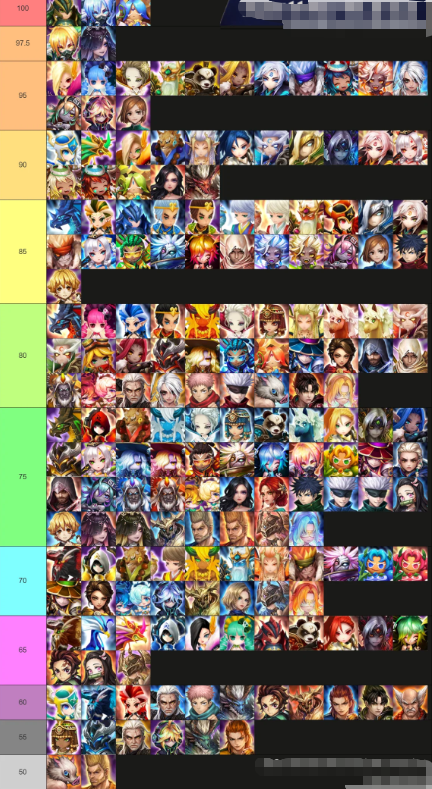
B. Why a tier list matters in Rush (and why your account feels “stuck” without one)
A summoners war rush tier list isn’t just for flexing. It’s for survival. Rush has a lot of monsters, and early on the game is very good at tricking you into building “whatever looks cool” — and then punishing you later because your team has no real frontline, no consistent buffs, or no reliable damage scaling.
Tier lists help with:
PVE stage farming (your “AFK paycheck”)
Tower Defense clears (where placement + utility matters)
Boss fights like Naraka/Dragon Nest style content where you need sustained DPS and a team that doesn’t collapse
Resource efficiency (because the moment you spread upgrades too wide, you feel broke forever)
C. How rankings are decided (damage, tankiness, utility, and “synergy that just works”)
Most tier lists for Rush are built around a few brutally practical questions:
Do you clear waves faster? (speed = progression = more loot)
Can you keep your team alive? (stuns, sleeps, blinds, shields, invincibility, healing)
Do you scale well with upgrades and team buffs? (some kits just explode in value once your comp clicks)
Do you work in multiple modes? (stage + tower defense + boss + PvP-ish modes)
Pocket Gamer’s tier list leans into this hard: it explicitly tells you to prioritize Legend and Unique monsters, because lower rarities “are too weak to keep up” later.
Content
I. Summoners War Rush Tier List Basics (Legend vs Unique vs “don’t waste your time”)
Before we start naming monsters: you need the rarity reality check.
Pocket Gamer breaks Rush rarity as:
Legend (best)
Unique
Hero
Elite
Rare (worst)
And they’re blunt about it: you want to focus on Legend or Unique, because the power curve later doesn’t care how emotionally attached you are to your Elite unit.
So for this article:
Legend Tier = the monsters you build around
S-tier = still excellent, often free/accessible, usually supports or strong control tools
A-tier = solid, comp-dependent, or mode-specific specialists
B/C-tier = early fillers or niche counters you don’t hard-invest into long-term
II. Legend Tier Monsters (Top Picks)
This is the “if I had to start over” section. These monsters are the ones that make your account feel like it’s accelerating instead of crawling.
A. The best Legend monsters (the “build around these” list)
Pocket Gamer’s S+ tier list (their top tier) includes: Prime Rock Star Belle, Sabrina, Artamiel, Soha, Melissa, Seimei, Cassandra, Jeanne and more.
I’m going to focus on the ones you specifically asked about (and the ones that consistently show up as core picks).
1) Sabrina (the “she’s basically unfair” DPS)
Pocket Gamer literally says Sabrina has been the best monster “for a while,” to the point she could be in her own tier, and highlights that she can prioritise tanks and deals insanely high damage.
AllClash also ranks her as a long-term staple because she’s useful “practically everywhere,” brings a double hit rate buff, and boosts ranged allies’ damage.
Player translation: Sabrina isn’t just damage — she’s damage plus team enablement. That’s why she doesn’t fall off.
2) Prime Rock Star Belle (premium carry-support hybrid energy)
Pocket Gamer puts Prime Rock Star Belle straight into S+ tier.
And Com2uS/Hive notices mention Belle as a new Legend monster joining the ranks (late 2026 cycle), describing her as a “Rock Star” who builds up and delivers big impact.
What this means in real gameplay terms: she’s positioned like a modern “headline Legend” — the kind of unit designed to matter across more than one mode.
3) Artamiel (frontline anchor + melee synergy monster)
Pocket Gamer’s S+ tier includes Artamiel and even calls out that Melissa’s kit synergizes with him.
And Com2uS’ release/update messaging explicitly references Artamiel as a major Legendary-grade addition to Rush content updates.
Player translation: Artamiel is not just “a tank.” He’s the kind of frontline presence that lets your buffs actually matter because your team survives long enough to use them.
4) Jeanne (attack speed + “I refuse to die” energy)
Pocket Gamer highlights Jeanne specifically for attack speed buff and the fact she can become invincible at 5★.
In an idle TD where maps can go sideways fast, “invincible at 5★” isn’t cute — it’s the difference between stable clearing and constant resets.
5) Melissa (buff engine that pushes comps over the edge)
Pocket Gamer calls Melissa a “new monster that went straight to the S tier,” and explains her kit boosts CRIT DMG for melee allies (synergy with Artamiel) and her skill applies Amplify to all allies.
That’s why she’s meta-defining: her value scales with your entire roster.
6) Soha / Cassandra / Seimei (the “support backbone” trio)
Pocket Gamer lists all three in S+ tier.
What matters here is less “exact numbers” and more “role coverage”: in Rush, you don’t want five glass cannons. You want a comp that:
kills fast,
doesn’t die,
keeps buffs up,
and doesn’t crumble when a boss wave shows up.
B. Why these dominate AFK farming and endless/tower content
Here’s the simple reason: Rush rewards consistency.
Stage mode keeps your monsters fighting continuously for resources.
Tower defense modes punish weak utility — if you can’t control waves, your damage doesn’t matter.
So top-tier monsters are the ones that bring at least one of these:
“I delete threats” damage
“I control the map” utility (stun/sleep/blind/freeze)
“I keep the squad alive” sustain (shields, healing, invincibility)
C. Builds for max performance (stat focus, not fake “perfect set names”)
Rush has multiple power systems (Training, Relics, Area Survey, etc.).
So instead of pretending there’s one magic rune set that solves everything, here’s the practical build mindset:
For DPS (Sabrina / Belle / Vanessa-style damage):
Prioritize ATK + Crit + attack speed / skill frequency (whatever your system expresses as “more actions / more procs”). Your damage carry doesn’t need to be tanky if your frontline is real.For tanks (Artamiel / Jeanne):
Prioritize HP/DEF + mitigation + “don’t get deleted” stats. If your frontline collapses, your backline is basically cosmetic.For buff supports (Melissa / Shihwa / Soha):
Prioritize buff uptime and survivability. A dead support is a support with 0% uptime.
III. S-Tier Heroes and DPS (High Impact, Not Always “Legend-only”)
Pocket Gamer’s tier list is Legend-focused, but it also calls out some monsters that are either accessible or functionally “must build” because they carry value beyond raw rarity.
A. High-damage dealers you actually feel in early/mid game
You mentioned Vanessa, Melissa, Seimei — and yes, those are treated as top-tier picks in the current meta snapshot.
Here’s why DPS value is different in Rush:
In stage mode, DPS = faster kills = faster progression.
In tower defense, DPS must pair with utility or it gets overwhelmed.
In boss modes (Dragon Nest / Naraka style fights), DPS must survive long enough to matter.
B. Why they’re ideal for bossing
Steam’s page spells out a lot of the boss-focused identity:
“exploit each boss’s weakness to clear stages faster”
big modes like Sky Island Defense and Challenge Mode put pressure on placement and card usage
So DPS picks that also bring:
targeting priority (like Sabrina focusing tanks),
buffs that scale the whole team,
or control tools,
…end up being your best bossing investments.
C. Synergies with Legend tanks (the “don’t die while you do damage” rule)
The most common stable comp structure is:
1 main DPS (Sabrina or another carry)
1 frontline anchor (Artamiel / Jeanne)
1 buff engine (Melissa / Shihwa / Soha)
1 utility control (freeze/sleep/blind/stun)
This comp structure works because Tower Defense maps punish one-dimensional teams.
IV. A-Tier Supports and Tanks (Underrated “Make Your Team Work” Picks)
A-tier isn’t “mid.” A-tier is “I’m not always the flashiest, but I make your clears consistent.”
Pocket Gamer’s S tier includes monsters like Shihwa and Tesarion, and explains why they’re valuable.
A. Key tanks/healers/supports you’ll use a lot
You listed Cassandra, Soha, Jeanne — all appear as top-tier picks in Pocket Gamer’s S+ tier.
But beyond them, here are core “support logic” picks:
Shihwa (ranged buffer you can get for free)
Pocket Gamer calls Shihwa a very good buffer, applying CRIT Rate UP and CRIT DMG UP to ranged allies, and notes she can be obtained for free via Summoning Road.
That’s insane value, because it means you can get a meta-relevant buffer without praying to gacha gods.
B. Utility supports (sustain, control, “tempo”)
Rush is a tempo game in tower defense modes:
waste your stun too early → you die later
hold your defensive card too long → you die now
So supports that bring:
crit buffs,
attack speed,
debuffs like blind,
…are often worth more than “one more DPS.”
Pocket Gamer even calls out Ceres as valuable mainly because she can apply Blind, which adds a defensive layer and helps keep your frontline alive.
C. When to prioritize A-tier over S-tier (yes, it happens)
Here’s when A-tier support beats S-tier DPS:
your team dies before your DPS ramps
you’re failing tower defense waves due to lack of control
your runs are inconsistent (win/lose based on RNG waves)
In those cases, build the support first. Your DPS will magically “get stronger” because it’s alive longer and gets buffed more often.
V. B/C-Tier and Niche Units (Useful, But Don’t Marry Them)
Pocket Gamer’s A-tier includes monsters like Lushen, Verdehile, Anavel, Ariel, Delphoi, Alicia — which is basically the game saying: “these are playable, but not your forever core.”
A. Situational rares and uniques (Eleona, Anavel, Lushen)
Pocket Gamer places Eleona and Anavel in A-tier (usable, but not top).
They also list Lushen and Verdehile in A-tier — which is funny if you come from classic Summoners War where those names trigger muscle memory.
B. Early game fillers or specific stage counters
These units are fine when:
you need a specific control effect (sleep/freeze)
you need wave clear while your main DPS is underbuilt
you’re missing a key role and need a placeholder
Pocket Gamer specifically describes:
Delphoi: very good for tower defense, not much else; can put enemies to sleep and avoid death once per battle at 5★
Alicia: decent AoE DPS, can inflict Freeze, great against clusters
C. Who to skip long-term
Pocket Gamer’s C-tier basically says: don’t bother long-term — Tetra, Lapis, Galleon, Chasun aren’t worth building for the long run.
You can use them early if the game hands them to you, but don’t sink your premium upgrades into them if your goal is efficient progression.
VI. Reroll and Beginner Recommendations (How to Start Without Regretting Everything)
A. Best reroll targets (the “stop rerolling, start playing” list)
If you’re rerolling, aim for at least one of:
Sabrina
Prime Rock Star Belle
Artamiel
Melissa
Jeanne
Shihwa (if you want guaranteed early support value)
These show up at the top of current tier snapshots.
B. F2P starter teams and progression path
Here’s a clean F2P-friendly approach that doesn’t require whale luck:
Use Summoning Road and free acquisitions to build your initial core (Shihwa being a standout free buffer).
Build a team with:
1 carry DPS
1 frontline tank
1 buffer
1 control/utility
Push Stage Mode for passive growth (resources/EXP).
Start learning Tower Defense map logic early — placement matters and the game rewards it.
Also: don’t stress if you “invest wrong” early. BlueStacks points out Rush has a Rewind Glass system that lets you reset upgrades and recover materials, so experimenting isn’t a permanent account death sentence.
C. Safe A/S picks for beginners
Even if you don’t hit the dream reroll, you’re fine if you have:
one reliable buffer (Shihwa-style value)
one decent AoE control (freeze/sleep)
one stable tank
VII. Best Team Compositions by Stage
Rush has multiple modes that care about different things. Steam lists:
Stages
Sky Island Defense (Tower Defense Mode)
Challenge Mode (big maps, weekly seasons)
Guild Dungeon (50-monster army via guild collaboration)
and more
So you shouldn’t use one “perfect” team everywhere.
A. Early game AFK farm teams (Stage Mode)
Goal: stable clears, no wipeouts, solid passive resource gain.
Template:
1 strong DPS (Sabrina if you have her)
1 tank (Artamiel/Jeanne-type)
1 buffer (Shihwa/Melissa-type)
1 utility (freeze/sleep/blind/stun)
Why this works: Stage Mode is your idle engine — consistency beats “sometimes big damage.”
B. Endless/Tower Defense clears (Sky Island Defense / Challenge Mode)
Goal: wave control + boss control + correct placement.
Steam emphasizes that tower defense mode is about strategically placing monsters and using skill cards to wipe waves, plus real-time card choices in Challenge Mode.
Template:
Frontline: tank + bruiser
Backline: ranged DPS + buffer
Utility slot: freeze/sleep/blind/stun
Your damage can be god-tier, but if you can’t control lanes, you’ll get overrun.
C. Late game optimized lineups (boss raids, guild content, high difficulty)
Boss content tends to reward:
single-target damage
debuff uptime
survival under pressure
The official Rush site highlights deploying 25 monsters to fight a giant dragon (Naraka), and BlueStacks also references Dragon’s Nest requiring a full team against a giant boss.
So late-game boss comps usually shift toward:
one or two “true DPS” monsters
multiple supports for buffs/defense
enough frontline to keep the whole army alive
VIII. Rune and “Artifact” Priority Guide (Rush-style: stats + systems > old Sky Arena mindset)
Rush has growth systems like Training, Relics, and Area Survey on the official site.
Steam also describes equipment acquisition via Magic Orbs and auto-replacement if gear is stronger.
So even though players still say “runes/artifacts” out of habit, in Rush the practical approach is:
A. Priority stat goals by role
DPS
ATK scaling
crit scaling (if your kit benefits)
attack speed / action frequency
boss damage if you have it
Tank
HP/DEF
mitigation
“don’t die” passives or defensive stat boosts
Support
survivability first (dead buffer = no buff)
buff uptime / skill frequency
utility scaling where applicable
B. Farming and upgrade order (what to do first so you don’t feel broke)
Level + core upgrades on your main team first
Training stats (BlueStacks highlights Training as a permanent stat raise system)
Gear/equipment improvements (Magic Orb system, auto upgrades)
Relics/advanced systems when your account can support it
C. “Artifact upgrade order” without wasting resources
Rule of thumb: upgrade the things you use everywhere first:
your main DPS’s core scaling
your frontline’s survivability
your primary buffer’s uptime
And if you regret a monster investment, remember Rewind Glass exists — it’s literally there so early mistakes don’t hard-lock your progress.
IX. Skill Upgrade Priority (What to max first)
In Rush, skill upgrades are where monsters start feeling “real.” A monster at low star/low skill level can feel mediocre even if it’s top tier on paper.
A. General skill upgrade rules
Core damage skill first on your carry DPS
Teamwide buff skill first on buffers (anything that says “all allies”)
Survival tools first on tanks (taunt, invincibility triggers, shields)
B. “Reappraisal value” in Rush terms
Rush doesn’t play like Sky Arena reappraisal stones, but the idea is the same: you don’t want to pour premium upgrade resources into something you’ll bench later.
So:
upgrade top-tier monsters first,
keep niche monsters at “functional” level until you’re rich.
C. Low-tier monsters to ignore
Pocket Gamer’s C-tier list is basically your “don’t invest hard” list.
X. Updates and Meta Shifts (Laima, Artamiel, Belle, and “why tier lists change”)
A. Post-Laima / Artamiel shifts
Laima was introduced as a new Legend monster in an official notice context, with kit identity around disrupting enemies with Root and Blind effects.
Artamiel was highlighted as a major Legendary-grade content update addition and featured in limited-time pickup summon events early in the game’s lifecycle.
When monsters like that enter the roster, meta shifts because:
new control tools change survival consistency
new synergy buffs elevate older monsters (Melissa + Artamiel is a clear example)
B. Banner pull priorities (simple rule)
Pull for:
monsters that improve multiple modes
monsters that enable teams (buffers, control supports)
monsters that fix your account weakness (like “I keep dying”)
Don’t pull just because a monster is pretty. Rush is not that forgiving.
C. 2026 meta prediction (player-style, not fortune-teller nonsense)
Based on how Rush is structured (Stage Mode + Tower Defense + Boss + Guild content), the meta is always going to favor:
universal buffers
reliable control
frontline stability
DPS that scales with buffs
So even when “new shiny DPS” drops, supports and control monsters tend to age better.
XI. Comparisons to Classic Summoners War (Sky Arena) — and why your instincts might betray you
A. Rush vs RTA/Siege tier logic
In Sky Arena, speed tuning and turn order are the religion.
In Rush, you’re managing:
idle progression loops
tower defense placement and card usage
wave control
multi-unit army scaling
So a monster that’s “legendary” in RTA might be only okay in Rush if it doesn’t contribute to wave control or scaling.
B. Shared monsters, different performance
Pocket Gamer even points out some monsters like Ariel are staples in Summoners War, but in Rush he’s mid-tier.
That’s your warning sign: same name, different game, different value.
C. Rush as the “idle alternative”
If you’re burned out on classic SW grind, Rush is a cleaner “log in, progress, do your tower defense attempts, log out” loop — with the occasional sweaty mode like Challenge leaderboards if you want it.
XII. PVE Content Tier Focus (Stages, Tower Defense, Bossing, Farming)
A. Stage clears and “endless” progression
Stage mode is your idle backbone — monsters fight even when you’re not playing and earn resources automatically.
So your “best PVE monsters” are the ones that:
clear reliably
don’t die
scale with time investment
B. Boss counters and event monsters
Bossing emphasizes single-target damage, survivability, and synergy with buffs.
Rush’s site and Steam page both emphasize large-scale boss battles and event campaigns tied to monster releases.
So “tier” can shift during certain events where specific mechanics are favored.
C. Farming efficiency tiers
Farming efficiency is basically:
speed clearing
minimal reset risk
minimal manual babysitting
That’s why Sabrina is treated as top tier for so long — fast and reliable.
XIII. F2P vs Whale Tier Strategies
A. F2P build order
F2P should prioritize:
One top DPS
One top tank
One top support/buffer
One control specialist
Then widen roster after your core clears consistently.
Also, Summoning Road and login systems help reduce early gacha pressure, and the game encourages experimenting because of Rewind Glass.
B. Whale advantages (dupes and premium flexibility)
Whales get:
faster access to top-tier Legends
more duplicates for star-ups
more flexibility in building multiple specialized teams (boss team, TD team, PvP team)
That said, Rush still punishes bad comps. Money can speed up growth, but it can’t replace understanding tower defense placement and synergy.
C. Pay-to-win reality check
Rush has in-app purchases and competitive modes (Steam lists Online PvP and co-op).
So yes, spending can create a big gap — but in PvE progression, smart team building still matters a lot.
XIV. Community and Tool Resources (where players actually get tier updates)
A. Pocket Gamer and AllClash tier lists
Pocket Gamer’s tier list is updated with version numbers and explains why certain monsters sit where they do.
AllClash provides mode-by-mode notes and skill descriptions for many monsters, which is useful when you’re trying to understand why someone is rated highly.
B. Tiermaker templates and Reddit discussions
Tiermakers can be fun, but they’re not always current. For practical updates, you want sources that state patch/version and explain reasoning.
C. YouTube creators and update playlists
If you like “show me, don’t tell me” guides, YouTube is full of:
“post-update tier list” breakdowns
boss team showcases
relic investment logic
(Just be picky. Some creators are excellent; some are basically reading a list and calling it analysis.)
Bonus: Codes as a progression booster (not the focus, but worth mentioning)
Pocket Gamer keeps a running list of Rush codes and redemption steps, and the rewards include things like Rewind Glass, Offline EXP, and Offline Gold, which are massive for early acceleration.
If you only take one thing from this summoners war rush tier list guide, let it be this: Rush rewards consistency more than hype. The best monsters aren’t just “big numbers.” They’re the ones that:
clear waves reliably,
keep your team alive,
bring buffs/control that scale your entire roster,
and perform across multiple modes like Stage Mode, Sky Island Defense, and boss-focused content.
Legend/S+ monsters like Sabrina, Prime Rock Star Belle, Artamiel, Melissa, and Jeanne earn their top spots because they either carry damage, stabilize the frontline, or enable teamwide scaling that makes everything else stronger.
And if you’re a beginner? Don’t panic-invest — the game literally supports experimentation through systems like Rewind Glass, so you can course-correct without deleting your account.