Never Grave: The Witch and The Curse – Asession, Builds, Co-op, and Village Progression
The first thing that caught my attention about Never Grave: The Witch and The Curse was its visual style. At a glance, it looks like a beautifully illustrated Metroidvania filled with gloomy ruins, strange creatures, magical gardens, and a small witch wearing an oversized hat. Once I started digging into its systems, though, I realized that it is much more complicated than its storybook appearance suggests.
Never Grave combines side-scrolling action, roguelite dungeon runs, permanent Metroidvania abilities, temporary build upgrades, farming, crafting, village restoration, and four-player online co-op. That sounds like far too many ideas for one game, yet the basic gameplay loop is easy to understand: enter a changing dungeon, collect resources, defeat enemies, return to the ruined village, improve your facilities, and prepare for a stronger run.
The clever twist is that the witch is not technically the character under your control. You are playing as the cursed hat. After defeating certain enemies, the hat can possess them, giving you access to their health, attacks, movement options, and utility skills. This possession mechanic is used for combat, platforming, exploration, and puzzle solving, making it far more important than a temporary transformation gimmick.
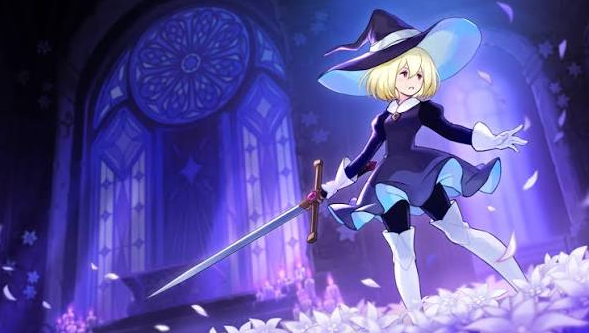
I. Introduction to Never Grave: The Witch and The Curse
A. What Is Never Grave?
Never Grave: The Witch and The Curse is a 2D action game developed by Frontside 180 and published by Pocketpair Publishing. It officially launched in March 2026 as a complete game rather than an Early Access project.
The game is usually described as a Metroidvania and roguelite hybrid. Its dungeons use procedurally rearranged rooms, temporary upgrades, randomized rewards, and run-based progression. At the same time, players obtain permanent movement abilities such as double jumps and other artifact-based actions that open previously inaccessible routes. B. Why It Is Trending in 2026
The most obvious reason Never Grave became relevant in 2026 is its full multiplatform launch. The game arrived on PC, PlayStation, Xbox, and Nintendo Switch after spending several years in development and gathering attention through playable demos.
Its connection to Pocketpair also brought additional visibility. Many players recognized Pocketpair as the company behind Palworld, although Never Grave is not a Palworld spin-off and does not share its universe. Post-launch balance patches, multiplayer improvements, and the July 2026 announcement of an upcoming Android version have kept the game in discussion beyond its initial release period. C. Overview of the Roguelite Metroidvania Hybrid
The easiest way to understand Never Grave is to separate its progression into two layers. The roguelite layer includes temporary Grimoires, Blessings, equipment combinations, and randomized dungeon layouts. Many of these advantages disappear when a run ends.
The Metroidvania layer is more permanent. Artifacts teach traversal actions that allow you to reach new ledges, hidden rooms, alternate passages, and previously blocked areas. Village improvements and skill-tree upgrades also remain between runs, so even a failed expedition can contribute to long-term progress.
This combination creates an unusual rhythm. You are not simply repeating dungeons for a higher score, and you are not exploring one completely fixed world. You are gradually unlocking permanent tools inside environments that continue changing around you.
II. Game Origins and Development
A. Developer Profile: Frontside 180 and Pocketpair Publishing
Never Grave was developed by Frontside 180, a studio originally introduced as a newly formed internal development team associated with Pocketpair. Pocketpair Publishing handles the commercial release and promotion.
The development team includes Yasuomi Sakai as producer, director, level designer, and programmer. That concentration of responsibilities helps explain why the game feels like a tightly connected collection of ideas rather than a product designed by several disconnected departments. B. Connection to Palworld’s Success
It would be misleading to call Never Grave “Palworld in 2D.” The games have different developers, structures, settings, and target audiences. However, Pocketpair’s success gave its publishing activity much more attention than it would have received a few years earlier.
That connection helped Never Grave reach players who might otherwise have overlooked a small roguelite Metroidvania. It also created expectations around creature interaction, crafting, multiplayer, and base development, even though Never Grave approaches those systems in a much smaller side-scrolling format.
From a player’s perspective, the Pocketpair name may get you through the door, but the possession system and dungeon loop determine whether you stay.
C. Evolution from Demo to Full 1.0 Launch
Never Grave participated in the February 2024 Steam Next Fest, where its demo was installed by more than 110,000 players. The developers initially planned to release the game through Early Access and expand it gradually.
Feedback from the demo led to delays and substantial revisions. The team discussed improving possession-focused areas, adding treasure maps, making non-player characters more involved, refining animations, and expanding the available stages. In June 2025, the developers announced that they would skip Early Access and release the game directly as version 1.0. t decision matters because the March 2026 release is not an unfinished Early Access build. It is the official full release, even though it has continued receiving balance changes and quality-of-life improvements.
III. Core Gameplay Mechanics
A. The Cursed Hat and Possession System
Possession is the mechanic that gives Never Grave its identity. After defeating a compatible enemy, you can separate the hat from the witch and place it on that creature. The enemy then becomes your temporary body.
A possessed creature has its own attack patterns, movement characteristics, reach, and health. A large monster may provide stronger close-range attacks and an additional layer of protection, while a more specialized creature may help activate an environmental object or reach a route that the witch cannot use normally.
Possession is not automatically the best choice in every room. Enemy bodies can be larger, slower, or less suited to precise platforming. The real skill comes from knowing when an enemy form solves the current problem and when returning to the witch is safer.
B. Switching Between Witch and Enemy Forms
The witch is generally better for fast movement, dodging, sword attacks, spellcasting, and careful platforming. Possessed enemies are more situational but can absorb damage, overpower groups, or provide an ability needed for a puzzle.
I treat possession like carrying a second character rather than activating a temporary super mode. Before entering a difficult room, I consider whether my current body has enough health, whether its attack range matches the enemies ahead, and whether the room contains narrow platforms that will be awkward for a larger creature.
Players who ignore possession can still clear many basic encounters, but they will miss one of the game’s most flexible survival tools.
C. Magic Spell Combat and Depletable Weapons
The witch uses normal physical attacks alongside equippable spells and tools. Spells consume magic points, which can be restored through combat and enhanced through upgrades. You can therefore build around regular attacks, frequent spellcasting, status effects, or a mixture of all three.
The main weapon does not function like a disposable blade that permanently breaks. The more meaningful limitations come from magic consumption, tool charges, temporary effects, and the resources available during a run.
This means hoarding every spell for a future boss is usually a mistake. Magic should help protect your health during difficult rooms, especially when normal attacks would force you into dangerous close-range exchanges.
D. Ability-Gated Exploration and Permanent Upgrades
Artifacts grant permanent movement actions, including abilities such as the double jump. These upgrades create the Metroidvania side of the game because they allow you to revisit older regions and enter routes that were previously unreachable. not assume that every blocked path can be solved during the current run. When you find an unreachable ledge, suspicious wall, or sealed passage, remember its general location and continue progressing.
The safest approach is to treat early exploration as preparation. Collect materials, identify locked routes, unlock permanent actions, and then return with the correct movement ability.
IV. Dungeon Design and Exploration
A. Procedurally Generated Dungeons
Never Grave’s dungeons are built from rearranged rooms rather than one completely fixed map. Ruins, botanical environments, volcanic locations, and other biomes use their own enemies, traps, resources, visual themes, and boss mechanics.
Procedural generation keeps the exact route from being identical, but it does not create an entirely unfamiliar world on every attempt. After several runs, you begin recognizing individual room templates and learning where secrets or hazards are likely to appear. t balance has advantages and disadvantages. Familiar rooms let players improve their routing, but repeated templates can also make resource farming feel repetitive.
B. Interconnected Puzzle Rooms and Secret Areas
Exploration is not limited to moving toward the next exit. Dungeons contain branching paths, puzzles, hidden rewards, destructible objects, alternate routes, and passages requiring specific abilities or possessed forms.
Whenever possible, inspect dead ends before assuming they are empty. Unusual wall shapes, isolated platforms, environmental switches, and suspicious gaps often indicate that a reward is nearby.
At the same time, do not waste an entire run trying to reach something that clearly requires an ability you have not unlocked. Efficient exploration means knowing the difference between a hidden path and a future path.
C. Biome-Specific Bosses and Environmental Hazards
Bosses are designed around the identity of their biome. Official examples include a massive golem using lasers, the guardian of the botanical garden creating storms, and a volcanic lord controlling molten lava.
These fights require more than standing beside a boss and repeating the strongest attack. Arena hazards, summoned enemies, movement restrictions, and environmental effects can remain dangerous even after you understand the boss’s basic animation pattern. trong build helps, but positioning remains important. A player who brings high damage without a safe response to the arena mechanics can still lose quickly.
D. Teleportation and Backtracking Mechanics
Portals make it easier to move through regions and return to important branches. I use them as exploration anchors: clear the nearby routes, locate the next portal, and then travel back to unfinished sections instead of repeatedly crossing the entire map.
Backtracking becomes more valuable after obtaining permanent movement abilities. Earlier regions may contain spells, tools, blueprints, equipment, or materials hidden behind routes that could not be reached during the first visit.
The important point is not to backtrack randomly. Return with a purpose, such as opening a specific ability-gated path or farming a material needed for the next village upgrade.
V. Village Restoration and Base Building
A. Rebuilding the Ruined Hub Village
The village is the permanent center of progression. Materials collected in dungeons can be used to clear rubble, restore damaged areas, and construct facilities.
The village also creates an emotional contrast with the dungeons. Expeditions are dangerous and temporary, while every restored building makes the hub feel more alive and useful. Even when a run ends badly, returning with enough stone, wood, food, or monster materials can still move the village forward. B. Farms, Crafting Stations, and Sanctuaries
Facilities unlock different parts of the progression system. Research-related buildings provide new development options, crafting stations support equipment and tools, while combat pillars and similar structures improve permanent capabilities.
The surviving church acts as a central sanctuary, but village development is not purely decorative. Facilities directly influence the strength, equipment, food, potions, and services available before the next expedition.
My advice is to prioritize buildings that unlock permanent combat systems before spending heavily on decorative or highly specialized production.
C. Resource Farming and Crop Cultivation
Fields can be used to cultivate crops, while restored village systems support food production, potion preparation, and other useful resources.
Farming is not simply a relaxing activity added between battles. Meals and produced items can provide practical advantages during dungeon runs. The village therefore functions like a long-term build that exists alongside the temporary build assembled inside each dungeon.
Plant crops regularly and collect finished produce whenever you return. Leaving fields unused means ignoring a renewable source of preparation materials.
D. Unlocking Permanent Buffs and Gear
Permanent power comes from skill trees, constructed facilities, food systems, equipment development, and base-stat improvements. The official progression design specifically combines a permanent skill tree with equipment collected during adventures. nd early resources on upgrades that improve survival consistently. A small increase to health, attack, recovery, or equipment access helps every future run, while a niche upgrade may provide no value unless you find a specific temporary combination.
The village is where unlucky dungeon runs become less punishing. Random rewards change, but permanent development steadily raises your minimum level of power.
VI. Boss Battles and Combat Challenges
A. Crimson Warden and Ruins Depth Encounters
The Crimson Warden is one of the first major progression walls players are likely to encounter around the Ruins portion of the game. Reaching it is only part of the challenge because the dungeon’s seal structure requires repeated progress before certain boss doors become available.
Ruins Depth and later areas increase enemy pressure while expecting players to understand possession, spell use, permanent upgrades, and route management.
Do not treat repeated Ruins runs as wasted attempts. They are opportunities to obtain materials, improve the village, learn room layouts, and assemble stronger temporary builds.
B. Pattern Memorization and No-Damage Strategies
Boss patterns matter, but Never Grave deliberately adds arena mechanics that prevent every encounter from becoming a simple memorization exercise.
For a no-damage attempt, focus on identifying the safest location for each attack rather than trying to maximize damage constantly. Learn which attacks allow a full combo, which permit only one or two hits, and which require you to stop attacking completely.
Possessed enemies can also provide emergency health or defensive utility. Entering a boss room with a suitable body may be more useful than saving a weak creature merely because it is available.
C. Environmental Mechanics in Boss Arenas
Lasers, storms, lava, summoned hazards, and changing floor conditions make the arena itself part of the boss.
During the first few attempts, watch the environment as carefully as the boss. Some attacks are easy to dodge in isolation but become dangerous when combined with a restricted platform, lingering hazard, or approaching projectile.
The safest rhythm is usually to survive one complete cycle before becoming aggressive. Once you understand how the boss and arena interact, you can identify the moments when attacking is genuinely safe.
D. Boss Farming Routes for Achievement Hunters
Never Grave includes 41 Steam achievements covering bosses, possession, equipment, farming, alternate routes, resource activities, and long-term combat milestones. ievement hunters should combine goals instead of farming them individually. A Ruins run can contribute to enemy defeats, Grimoire collection, Blessing totals, crop resources, equipment materials, and boss practice at the same time.
Build a route that clears reward-heavy rooms, activates useful portals, and finishes near the target boss. Efficient farming is less about rushing blindly and more about collecting several forms of progress during one expedition.
VII. Multiplayer and Co-op Features
A. Four-Player Online Co-op
Never Grave supports online co-op for as many as four players. The game can be completed alone, but multiplayer allows a group to explore dungeons, fight bosses, gather resources, and contribute to village activity together. ss-platform multiplayer was announced for the main console and PC versions, although players should keep every copy updated because matchmaking can be restricted when participants are running different game versions.
B. Cooperative Dungeon Conquest and Boss Fights
Co-op reduces the pressure placed on one character. One player can focus on close-range physical damage, another can use ranged magic, and a third can bring a possessed body that provides protection or crowd control.
Communication is especially valuable during bosses. Players should decide who will attack, revive, control summoned enemies, and handle dangerous arena mechanics.
A group with four high-damage builds may clear normal rooms quickly but struggle when nobody is prepared to protect or revive teammates.
C. Multiplayer Possession Tactics
Possession becomes more flexible in multiplayer because the party can carry several enemy forms at once. One player can use a bulky creature to absorb pressure while another stays in witch form and casts spells from a safer position.
Before leaving an area, compare possessed forms. Keeping four nearly identical creatures wastes the system’s potential. A more balanced group might carry a defensive body, a mobile body, a heavy attacker, and one form needed for environmental interactions.
Possessed creatures should support the party’s weaknesses rather than duplicate abilities everyone already has.
D. LAN vs. Online Multiplayer Support
Official storefronts advertise online multiplayer, online co-op, and cross-platform features. They do not advertise a dedicated LAN mode, local split-screen mode, or couch co-op.
Console players may also require the appropriate online subscription to access multiplayer. Xbox, for example, states that online console play requires Game Pass Core or Ultimate. yers planning a local multiplayer session should therefore not assume that several people can play on one screen or through an offline network.
VIII. Character Progression and Build Optimization
A. Grimoire and Blessing Systems
Grimoires and Blessings offer temporary choices during a run. They can improve physical attacks, magical damage, critical effects, status conditions, defense, recovery, revival, and other build characteristics.
These upgrades should not be selected in isolation. An average bonus that supports three existing effects is usually more valuable than a powerful bonus that has no connection to the rest of your build.
Early selections may also influence which related options become useful later, so decide on a general direction before stacking random effects.
B. Trait Synergy and Build Strategy
Magic, items, equipment, and temporary upgrades carry traits that can interact with one another. The goal is to create a chain of effects rather than collecting unrelated percentage increases.
For example, a status-focused build might apply frost, poison, oil, fire, or stun and then gain bonus damage whenever those effects activate. A critical build may improve critical chance, critical damage, normal attack speed, and effects triggered by repeated hits.
Read every upgrade completely. The strongest choice is often the one that activates the largest number of existing traits.
C. Physical, Magic, and Retaliation Builds
A physical build prioritizes normal attack damage, critical chance, attack speed, stun, and effects triggered after consecutive strikes. It is straightforward and performs well when you are comfortable staying close to enemies.
A magic build focuses on magical critical hits, status effects, spell damage, and magic-point recovery. It is safer for players who prefer attacking from range.
A retaliation build stacks health, defense, revival, recovery, and damage triggered when the player is hit. This approach can be forgiving, but it should not become an excuse to stand inside every boss attack.
D. Avoiding Upgrade Traps and Hoarding Mistakes
The most common upgrade trap is choosing every rare-looking option without considering synergy. A lower-tier bonus supporting your current plan may outperform a flashy effect that requires a mechanic you are not using.
Hoarding creates a different problem. Spells, tools, meals, and consumable advantages have no value if you die without activating them.
Use resources when they can protect a strong run. Saving everything for a future boss is pointless when the current room is about to remove half your health.
IX. Art Style and Atmospheric Design
A. Hand-Drawn 2D Animation Quality
Never Grave uses traditional Japanese limited-animation techniques for its 2D characters. The movement is intentionally stylized rather than built around ultra-fluid realism.
This gives the witch and enemies a distinctive appearance that fits the game’s illustrated world. Attacks remain readable, silhouettes are clear, and character designs do not disappear into the detailed backgrounds. B. Storybook Backgrounds and Color Palette
The backgrounds use thick painted layers and a cut-out picture-book style. Ruins feel old and lonely, gardens are colorful but threatening, and darker locations maintain a sense of danger without making every object difficult to see.
The art is one of the game’s most consistent strengths. Even reviews critical of progression and repetition have generally praised its appearance and presentation. C. Comparisons to Hollow Knight and Japanese Animation
The side view, dark fantasy setting, small protagonist, ruined architecture, and hand-drawn presentation naturally lead to comparisons with Hollow Knight.
The resemblance is strongest at a visual level. Never Grave’s actual structure is more heavily focused on randomized runs, temporary build choices, possession, farming, crafting, village restoration, and online co-op.
It is better to view Hollow Knight as an easy visual reference than as a complete description of how Never Grave plays.
D. Soundtrack and Immersive Audio
The music shifts between calmer village themes and more intense dungeon or boss tracks. Environmental sounds and attack effects also provide important combat feedback, particularly when a dangerous ability is beginning outside the center of the screen.
The official soundtrack contains 13 original tracks and was released alongside a digital art book. soundtrack may not be the first system players discuss, but it supports the contrast between the safe village and hostile dungeon environments.
X. Platform Availability and Release Details
A. Launch Date: March 5, 2026
Never Grave officially launched worldwide on March 5, 2026. Steam may display March 4 in certain regions because of storefront timing and time-zone differences, but March 5 is the release date used in the official Pocketpair and console announcements. ew3turn276137view1
B. Supported Platforms
The game is available on Windows PC through Steam and the Microsoft Store, PlayStation 5, PlayStation 4, Xbox Series X|S, and Nintendo Switch. Xbox also supports Xbox Play Anywhere. Android edition was confirmed on July 8, 2026 and is currently available for Google Play pre-registration. Pocketpair has not announced it as a replacement for the existing premium console and PC versions. C. Pricing and Regional Availability
The standard edition is listed at $16.99 in the United States, while the Xbox Deluxe Edition containing the soundtrack and digital art book is listed at $19.99. Prices vary by currency, platform, region, and temporary promotion. PC version supports English, Japanese, Simplified Chinese, and Traditional Chinese interface and subtitle options. Players should check their own regional storefront before purchasing because language support and pricing are not identical everywhere.
D. Demo and Steam Next Fest Participation
The February 2024 Steam Next Fest demo introduced players to possession, combat, exploration, and the early village systems. It became one of the event’s most-played demos and passed 110,000 installations.
That original demo was later scheduled for closure as development moved toward the complete version. Players looking for the current experience should use the retail release rather than judging the finished game entirely by old demo footage. XI. Player Experience and Community Reception
A. Praise for Combat and Criticism of Grind
Steam currently classifies overall user reception as Mostly Positive, with 71 percent of 509 Steam-purchaser reviews positive at the time of checking. Recent reception has improved, although these figures will continue changing. itive reviews frequently mention smooth combat, responsive traversal, attractive art, village development, and enjoyable possession mechanics. Criticism commonly focuses on grinding, expensive permanent upgrades, repeated room templates, limited narrative development, and progression barriers. B. Artificial Progression Walls and Repetition
One controversial system requires repeated dungeon progress before certain sealed boss encounters become available. Players may also be returned to the village after reaching a progression milestone, causing temporary run bonuses to disappear.
This design ensures that village upgrades remain important, but it can interrupt a strong build and make players feel that progress is being controlled artificially.
The experience is more enjoyable when each run has several goals. Gathering resources, finding blueprints, unlocking a route, testing a build, and preparing for a boss gives repetition more purpose.
C. Replay Value and Competitive Play
Replay value comes from randomized layouts, build experimentation, difficulty options, achievements, co-op combinations, permanent development, and route optimization.
The official store pages do not advertise a built-in global leaderboard system. Competitive players are therefore more likely to compare completion times, challenge runs, achievement progress, and community-recorded speedruns.
Never Grave has speedrun potential, but its randomized upgrades and long-term village progression make category rules important when comparing runs.
D. Community Features and Mod Support
The community currently focuses on build discussions, boss advice, achievement guides, farming routes, multiplayer coordination, and speedrun attempts.
There is no official Steam Workshop integration, public level editor, or formally announced mod toolkit. Players should not purchase the game expecting a large supported modding scene.
The most valuable community content is practical: explanations of trait interactions, safe boss strategies, hidden routes, and efficient village priorities.
XII. Tips, Tricks, and Strategy Guide
A. Beginner’s Guide to Possession and Combat
New players should practice throwing the hat and returning to witch form before entering harder areas. Possess enemies when their body gives you a clear advantage, not simply because possession is available.
Use normal attacks to restore magic, cast spells before dangerous enemies enter close range, and dodge through attacks instead of jumping automatically.
Most importantly, protect your health. Finishing a room slightly more slowly is better than reaching the boss with no recovery options.
B. Advanced Tactics for High Scores and Speedruns
Advanced routing begins with recognizing room templates. Learn which branches usually contain rewards, which rooms waste time, and where portals can shorten backtracking.
Decide your build direction early and skip upgrades that do not support it. Pausing to compare every option may be sensible in a normal run, but speed-oriented players need a quick priority system.
Village preparation should also be standardized. Enter every attempt with the same food, equipment plan, and upgrade priorities so that improvements can be measured accurately.
C. Beating Tough Bosses and Avoiding Common Pitfalls
Do not enter a boss room simply because the door is open. Check health, spell selection, tool charges, possessed form, equipment traits, and temporary bonuses first.
During the first attempt, prioritize observation. Learn where the boss moves, what signals each attack, and how the environment changes.
A common mistake is chasing the boss across the arena and attacking from a bad position. Let the boss complete dangerous movement, then punish the recovery period.
D. Efficient Resource Farming and Village Progression
Clear destructible objects, reward rooms, and material-rich branches rather than sprinting directly toward the exit. Portals can reduce the cost of returning to unfinished routes.
Before starting a farming run, select one major construction goal. Check exactly which resources it needs and prioritize the biome that provides them.
Spend resources after returning. Carrying a large stockpile without building anything delays the permanent power that makes future farming faster.
XIII. SEO and Keyword Integration Strategy
A. Related Keywords for Never Grave
Useful semantic keywords include Never Grave: The Witch and The Curse guide, Never Grave possession system, Never Grave builds, Never Grave co-op, Never Grave village upgrades, Never Grave boss guide, Never Grave Grimoires and Blessings, Never Grave platforms, and Never Grave beginner tips.
“LSI keywords” is commonly used as shorthand, but search volume should not be assumed. Verify demand through an up-to-date keyword research platform before labeling any phrase high volume.
B. Semantic Keyword Placement
Place the complete keyword in the title, introduction, conclusion, and one relevant heading. Supporting queries can then appear naturally within sections matching their intent.
For example, “Never Grave co-op” belongs in the multiplayer section, while “Never Grave builds” belongs in the progression section.
Google recommends using the words people search for in prominent, descriptive locations without sacrificing readability. C. Avoiding Keyword Stuffing
Do not repeat “never grave the witch and the curse” mechanically in every paragraph. Use the official title where clarity is important, then rely on natural alternatives such as “the game,” “the roguelite,” “Frontside 180’s adventure,” or “the possession system.”
Topical relevance comes from answering related questions thoroughly. Forced repetition creates awkward writing and weakens the player-focused tone.
XIV. Content Optimization for Search Engines
A. Meta Title and Description
A suitable meta title is:
Never Grave: The Witch and The Curse Guide and Tips
A suitable meta description is:
Explore Never Grave builds, possession tactics, village upgrades, boss strategies, co-op features, platforms, progression systems, and beginner tips.
Titles should remain concise and descriptive, while meta descriptions should accurately summarize the page rather than act as a list of repeated keywords. B. Image Alt Text and Internal Links
Good image alt text describes what is visible and why it matters. Examples include “witch fighting a golem in Never Grave” and “ruined village restoration facilities in Never Grave.”
Avoid alt text filled with unrelated commercial phrases or repeated keywords. Google recommends useful, contextual descriptions rather than keyword stuffing. ernal links could connect to guides covering Metroidvania games, roguelite builds, co-op setup, boss strategies, farming systems, or similar Pocketpair titles.
C. Structured Data and FAQ Schema
Use Article structured data for a complete guide, including accurate headline, image, author, publication date, and modification date information. Article markup can help search systems understand the page and its associated images or dates. content should be visible to readers and should answer genuine questions such as whether the game supports co-op, which platforms are available, or whether it launched in Early Access.
Structured data must represent the page accurately. Do not add fake ratings, invented prices, unannounced DLC, or hidden answers merely to chase a richer search appearance. XV. Future Updates and Roadmap
A. Potential DLC and Seasonal Content
Frontside 180 and Pocketpair have not announced a formal DLC roadmap, seasonal battle pass, or major paid expansion schedule.
Possible additions such as new dungeons, enemies, possession forms, bosses, village facilities, and challenge modes would fit the existing structure, but they should be treated as possibilities rather than confirmed plans.
The only major additional platform project confirmed in July 2026 is the upcoming Android version.
B. Community-Requested Improvements
Players have requested smoother early progression, reduced repetition, stronger multiplayer functionality, better explanations for village systems, additional language options, broader matchmaking tools, save improvements, and more control over village characters or objects.
The developers have already released updates addressing difficulty, matchmaking, early equipment access, control responsiveness, final-boss balance, and critical bugs. ther quality-of-life updates would likely have more immediate value than simply adding another expensive progression layer.
C. Long-Term Support and Developer Plans
The post-launch patches show that the team has been willing to respond to balance and usability problems. Version 1.3 focused on multiplayer and matchmaking, version 1.3.5 adjusted the early-game experience, and version 1.4 improved combat feel and changed final-boss balance.
That is evidence of active support, but not proof of years of planned DLC. Long-term expectations should remain realistic until Pocketpair or Frontside 180 publishes a formal roadmap.
XVI. Conclusion and Call to Action
A. Why Never Grave Deserves Your Attention
Never Grave: The Witch and The Curse deserves attention because it attempts something more ambitious than copying one successful Metroidvania. Its possession system changes combat and exploration, while village restoration gives failed runs a sense of lasting purpose.
The game is not flawless. Progression can feel padded, resource requirements become demanding, and procedural environments eventually reveal repeated patterns.
Even so, the combination of smooth movement, magical builds, enemy possession, hand-painted environments, and online co-op gives it a personality of its own.
B. Downloads, Reviews, and Community Support
Players can purchase the game on PC, PlayStation, Xbox, and Nintendo Switch, while Android users can follow the announced mobile release through Google Play pre-registration.
After spending enough time with the village and dungeon systems, leaving a detailed review can help other players decide whether the progression loop suits them. Useful reviews should mention platform performance, co-op stability, difficulty, preferred builds, and the amount of repetition encountered.
Sharing boss strategies and trait combinations is particularly valuable because the game does not explain every interaction clearly.
C. Final Thoughts on the Roguelite Metroidvania Renaissance
Never Grave sits in an interesting place between genres. It has the movement and ability-gated exploration of a Metroidvania, the temporary builds and repeated runs of a roguelite, and the production systems of a small village-building game.
As a player, I enjoyed it most after I stopped expecting every run to end with a defeated boss. Some runs are for blueprints. Some are for materials. Others are for testing a strange spell combination or carrying a useful monster deeper than before.
That slower rhythm will not appeal to everyone. However, players willing to experiment with possession, plan their builds, and invest in the village may find a creative adventure hidden beneath the grind. Never Grave is not the smoothest hybrid in the genre, but it is one of the more distinctive ones—and that makes it worth experiencing.