honor-of-kings-hero-tier-list
If you’ve been grinding ranked in Honor of Kings, you already know the pain: you lock a hero you like, the enemy locks a hero that’s meta, and suddenly your lane feels like you’re playing with one hand. That’s exactly why people keep searching for an honor of kings hero tier list—not because tier lists are sacred scripture, but because they’re a shortcut to understanding what’s currently overperforming and what’s quietly fallen off.
Honor of Kings is a 5v5 mobile MOBA, and the “best hero” conversation is always tied to one thing: patches. One buff to mobility, one nerf to sustain, one new item interaction, and the whole ladder tilts. That’s why I treat a tier list like a living document: it’s a snapshot of the meta, not a permanent truth.
This guide is written the way I’d explain the meta to a friend who just asked, “Okay… who do I pick to actually climb?” I’ll break down the tier system, explain why certain heroes are S-tier, then go lane-by-lane (Clash, Mid, Farm, Jungle, Roam/Support), and finish with team comp tips, solo queue advice, and how to stay ahead of balance changes.
A quick note on transparency: this tier list is aligned with current global-meta discussions and recent updates, including a widely-circulated global tier ranking updated in January 2026.
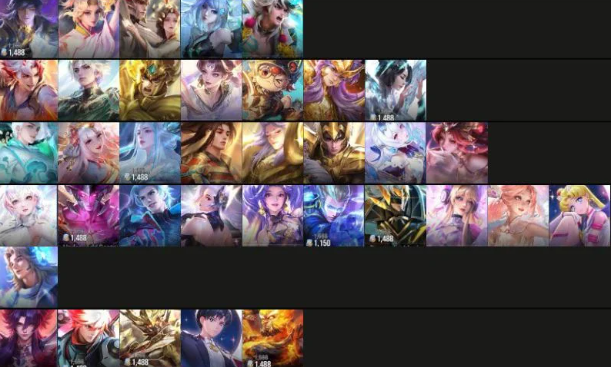
I. Honor of Kings Meta Basics (Why Tier Lists Even Work)
A tier list works in MOBA because ranked isn’t a vacuum. Most players aren’t scrimming with a 5-stack and perfect comms—they’re solo or duo, with random drafts and shaky coordination. That means heroes that are self-sufficient, snowball-friendly, and hard to punish will naturally rise. Meanwhile, heroes that require perfect setups (or teammates who understand your win condition) usually drop a tier for solo queue, even if they’re great in organized play.
In the current meta, three things keep showing up:
Tempo wins games. The team that starts fights first (and wins them clean) gets objectives, gold, map control, and momentum.
Mobility is a cheat code. Heroes that can rotate fast, escape bad fights, or force picks without dying are simply easier to climb with.
Reliable crowd control beats “maybe” damage. Burst is nice, but reliable CC creates guaranteed kills, which creates guaranteed wins.
That’s why you keep seeing the same patterns: aggressive junglers, mid mages with hard CC, and supports who can either hard-engage or keep the team alive through chaos.
II. Tier System Explained (How I’m Ranking Heroes)
I’m using a simple structure to keep it usable:
S-Tier: Meta-defining. These heroes have dominance + flexibility. They fit most comps and can carry games with fewer conditions.
A-Tier: Strong and reliable. They may need slightly better matchups, better timing, or a team that understands their role—but still very climbable.
B-Tier: Situational. They work, but you need matchup awareness and you’ll feel the meta pressure if you misplay.
C-Tier: Struggling. Either too easily countered, too slow, too patch-nerfed, or simply outclassed by safer picks.
When I say “meta,” I’m talking about what’s consistently showing up as top-performing choices in current global discussions and tier rankings (updated mid-January 2026), plus what’s reinforced by how the game is evolving with ongoing updates.
III. S-Tier Heroes Overall (The “If You Can Play These, Climb Faster” Picks)
Below are the names people keep circling when talking about top-tier global performance right now, with a strong emphasis on the idea that these heroes are either too efficient or too universally useful.
1) Augran (Jungle / Fighter)
Augran is the kind of hero that makes the early game feel unfair—in a good way for you, and a miserable way for the enemy. His strength isn’t only damage; it’s how quickly he converts an early lead into map control. With a strong early gank pattern, he turns mid-lane into a kill lane and makes side lanes permanently nervous.
How to play him like an S-tier:
Don’t autopilot farm. Your value is pressure, not PvE.
Gank lanes that have reliable CC (or lanes where the enemy used mobility already).
Once you get a lead, lock objectives. You’re not just collecting kills—you’re removing the enemy’s ability to breathe.
Why he’s S-tier: he creates tempo and forces the enemy team to react to you, which is basically the definition of “meta jungler.”
2) Lam (Jungle / Assassin)
Lam is that classic assassin package: burst, mobility, and objective pressure. When Lam is strong, the whole match becomes a question of “Can we track Lam?” Because if you can’t, you lose people in side lanes, and then you lose objectives, and then you lose the game.
How to climb with Lam:
Treat vision like a weapon. If you’re unseen, you’re winning.
Don’t flip fights when your burst windows aren’t ready.
Prioritize clean picks before big teamfights.
Lam’s S-tier identity is simple: he punishes mistakes harder than most heroes, and ranked is full of mistakes.
3) Daji (Mid / Burst Mage)
Daji is the “delete button” of mid-lane metas when she’s tuned well. Her biggest advantage is that she’s not asking for a 20-second extended fight. She’s asking for one mistake: step up too far, get caught, disappear.
How to play Daji correctly:
Your job is not to poke. Your job is to threaten.
Keep track of enemy cleanses and mobility.
Roam on power spikes and punish predictable rotations.
Daji stays meta because reliable CC + burst is always valuable, especially when the enemy team’s coordination is inconsistent.
4) Marco Polo (Farm Lane / Mobility Marksman)
Marco Polo is what happens when an ADC can outplay like an assassin. High mobility ADCs tend to do well when:
fights are messy,
tanks aren’t unkillable walls,
and you need someone who can reposition and survive.
If you’re playing him:
You win by spacing and timing, not by standing still and auto-attacking.
Watch enemy engage cooldowns like your life depends on it (because it does).
5) Loong (Farm Lane / Scaling Marksman)
Loong is the opposite vibe: safe laning, strong scaling, and late-game threat. If Marco Polo is “hands diff,” Loong is “macro diff.” You don’t need to force risky plays—just don’t fall behind, farm cleanly, and be the late-game win condition.
6) Yaria (Roam / Support Utility)
Yaria is a support that does the most important support job in ranked: make fights easier for your teammates. Good utility supports are meta because most teams aren’t perfectly coordinated. If your kit can slow down enemy engages, create picks, and stabilize fights, you’re basically increasing your team’s average IQ.
7) Dyadia (Roam / Healer Support)
Sustain supports rise when teamfights are frequent and messy, because healing smooths out bad positioning and imperfect trades. Dyadia’s value comes from making your team harder to kill in the “ranked chaos zone.”
These S-tier names align with current global tier discussions and rankings updated in January 2026.
IV. Clash Lane Tier List (Top Lane)
Clash lane in Honor of Kings is basically the “Do you understand spacing, wave timing, and when to leave lane?” exam. You can be a god in 1v1, but if your hero can’t impact objectives and mid fights, you’ll feel useless.
S-Tier Clash Lane
A lot of current global lists put Umbrosa at the top of the overall meta conversation right now, and Clash lane picks like Biron and Bai Qi remain extremely relevant as well.
Umbrosa: The kind of pick that wins by being annoying and hard to punish. If you play her well, you feel like you’re always one step ahead.
Biron / Bai Qi: You pick these when you want consistent frontline value and the ability to start fights (or survive them).
Nezha / Charlotte: Strong duel presence and teamfight impact.
A-Tier Clash Lane
These are strong, but either more matchup-dependent or require cleaner fundamentals:
Arthur, Dun, Mi Yue, Xiang Yu (reliable, stable)
Augran can flex here in some contexts, but he shines most as jungle.
B-Tier Clash Lane
These heroes can absolutely win, but you need to know what you’re doing:
Yang Jian, Mulan, Lu Bu, Li Xin
They’re often more execution-heavy or can be punished harder when behind.
Clash lane advice I’d tattoo on my forehead:
If you’re ahead, don’t just “win lane.” Win rotations.
If you’re behind, stop trying to ego 1v1 and become a teamfight tool.
V. Mid Lane Tier List
Mid is where tempo starts. If your mid can shove wave and roam first, your jungle gets to play the game on easy mode.
S-Tier Mid
The meta loves mid-laners that either:
burst someone instantly,
or control fights with reliable CC.
Current global tier conversations include picks like Daji as a standout burst/CC threat.
Other common top mid picks people mention:
control-heavy mages that can set up jungle ganks,
roam-capable mids that can influence side lanes without losing tower too early.
And yes—new heroes can shake things up. For example, Pocket Gamer notes a new mid-laner hero, Haya, released to kick off 2026 content updates.
(When a new mid shows up, expect the meta to wobble while people learn counterplay.)
A-Tier Mid
These are your “still strong, just not oppressive” picks:
burst mages with less reliable engage,
scaling mages that need time,
mids that are great in coordinated play but slightly harder in solo queue.
B-Tier Mid
Usually either:
too risky,
too slow,
or too easy to shut down by aggressive junglers.
Mid advice:
Your minimap is your best item.
If you can’t roam, at least control vision and deny roams.
VI. Farm Lane Tier List (Marksman / ADC)
Farm lane meta usually depends on two things:
How scary assassins are,
How good supports are at protecting you.
S-Tier Marksmen
Loong (safe + scales)
Marco Polo (mobility + outplay)
These show up heavily in current meta conversations and tier rankings.
A-Tier Marksmen
These can hard-carry, but they’re either more comp-dependent or punishable:
traditional “stand and deliver” ADCs need peel
semi-mobile ADCs need good spacing
B-Tier Marksmen
Not unplayable—just more stressful:
they get jumped and explode unless your support is glued to you
they may have weaker lane phases
Farm lane advice:
In solo queue, I’d rather be slightly lower DPS but alive than “highest DPS on paper” but constantly dead.
Your job is to output damage consistently, not to look cool once and die.
VII. Jungle Tier List
Jungle decides the pace of ranked. Period. If your jungler is proactive and your mid follows, the game becomes a series of forced mistakes by the enemy.
S-Tier Jungle
Augran
Lam
These are repeatedly highlighted in current global tier rankings.
Other high-performing jungle picks commonly discussed include the usual suspects that thrive on mobility, burst, and objective control.
A-Tier Jungle
Still great, but you need better planning:
some are slower farmers,
some require better mechanics,
some need specific lanes to function (like needing CC setup).
Jungle advice that actually wins games:
Don’t gank losing lanes unless it’s free. Ranked rule: don’t donate kills.
Track enemy jungler with common sense: camps + lanes + objective timers.
Objectives > ego kills, unless the ego kill guarantees the objective.
VIII. Roaming / Support Tier List
Support is the role that makes “average teammates” look good. That’s why strong supports are always valuable in climb metas.
S-Tier Support
Supports like Dyadia and Yaria are frequently cited in current high-tier discussions because they provide what ranked teams need most: stabilize fights, create picks, and keep carries alive.
You’ll also see engage tanks and heavy CC roamers in S/A territory because initiation wins games when teams are hesitant.
A-Tier Support
strong picks that excel in specific comps (peel comps vs dive comps)
great if you understand positioning and timing
Support advice:
Stop “following” your ADC like a pet if mid and jungle are fighting for their lives.
The best supports move first and control the map.
IX. Meta Overview and 2026 Predictions (What’s Trending)
Here’s what I’m seeing as the meta direction, based on current top-tier patterns and early-2026 updates:
Mobility keeps winning. If you can rotate, escape, and re-enter fights, you’ll stay relevant.
Hard CC stays premium. Burst + CC is the simplest ranked win condition.
New releases cause short-term chaos. New heroes like Haya entering the mid lane ecosystem are exactly the kind of thing that shifts bans and pick priorities for weeks.
Prediction I’d bet on: the more the game adds new modes and mechanics, the more value flexible heroes gain—ones that can do well even when your team comp is imperfect.
X. Beginner-Friendly Heroes (If You’re New and Want Low-Stress Wins)
If you’re new, the biggest trap is picking “hard carry” heroes that require perfect timing and matchup knowledge. Your best beginner picks are usually:
heroes with straightforward combos,
reliable CC,
or tanky kits that forgive mistakes.
Beginner checklist:
Pick one role to main first.
Pick 2–3 heroes in that role (one comfort pick, one meta pick, one counter pick).
Learn wave control and map awareness before you chase montage plays.
XI. Team Composition and Synergy (How to Draft Like You Want to Win)
A clean, simple ranked comp formula:
1 frontline (Clash or Roam tank)
1 engage or peel support (depending on ADC)
1 stable marksman
1 mid with CC or burst
1 jungle that sets the tempo
Synergy tips that matter:
If your marksman is immobile, draft peel.
If your jungle is assassin, draft CC setup.
If your mid is burst, draft frontline to hold fights long enough to land combos.
Counter-picking isn’t about “hard counters” only. Sometimes the counter is: draft easier execution than the enemy.
XII. Ability Mechanics That Define Meta Heroes
Meta heroes usually have at least one of these:
Reliable engage (they choose the fight)
Reliable escape (they refuse bad fights)
Reliable CC (they create guaranteed kills)
Reliable scaling (they become the win condition)
That’s why S-tier heroes feel “unfair.” It’s not always their raw damage—it’s that their kit gives them more ways to win.
XIII. Solo Queue Climbing Strategy (The Stuff That Actually Moves Your Rank)
If you’re solo queue climbing, here’s the uncomfortable truth: you need heroes that reduce teammate dependency.
That usually means:
Junglers who can gank without needing perfect follow-up
Mids who can roam and secure picks
Supports who can either hard-engage or hard-peel
Marksmen with survivability tools (or who can lane safely)
My solo queue rule:
If your hero needs your team to understand your plan… it’s probably not your best climbing hero.
XIV. Patch Changes and Why Tier Lists Shift Fast
Tier lists shift because:
numbers change (damage, cooldowns, sustain),
systems change (items, objectives, modes),
and the playerbase adapts.
Even outside raw balance, new content matters. For example, early 2026 updates introduced a new hero (Haya) and highlighted additional mode content, which can indirectly shift what heroes feel strongest.
So when you see a hero “suddenly” rise, sometimes it’s not a buff—it’s the meta environment changing around them.
XV. Role Mastery Beats Tier Lists (But Tier Lists Still Help)
Here’s the honest deal:
A great player on an A-tier hero beats a mediocre player on an S-tier hero.
But if both players are equal skill… S-tier wins more often.
So don’t treat this as “only pick S-tier.” Treat it as:
Use the tier list to pick a strong baseline
Then build mastery so you’re not meta-dependent forever
XVI. FAQ
Who is the best hero for climbing ranked?
If you want the highest “easy wins” potential, meta junglers like Augran and Lam, and burst/CC mids like Daji, are frequently highlighted as top-tier in current rankings.
Can lower-tier heroes succeed in high elo?
Yes—if you’re experienced on them and draft smart. But you’ll have less room for error, and you’ll feel bad matchups more intensely.
How often do tier lists change?
Whenever meaningful balance/content updates land or the meta adapts. A January 2026 update already reflects shifts like Umbrosa’s top-tier status in at least one widely referenced global tier ranking.
What makes a hero “meta-defining”?
They create tempo, force reactions, or provide universal value with fewer conditions than alternatives.
XVII. Community Resources and Data Signals (How I Stay Updated Without Guessing)
If you want to stay current:
track patch/update news,
watch high-level gameplay,
and compare multiple tier list perspectives.
One practical trick: watch how quickly a hero becomes a “default ban” after updates or new hero releases. That’s the fastest tell that something is warping ranked. And new hero drops like Haya are exactly when bans get spicy.
If you’re trying to climb, this honor of kings hero tier list isn’t telling you to abandon your favorites—it’s telling you where the game is currently handing out free value.
S-tier heroes are strong because they’re flexible, hard to punish, and great at creating tempo.
Lane-by-lane, the best picks are the ones that either start fights, survive fights, or end fights instantly.
Solo queue rewards self-sufficient kits and reliable CC more than “perfect comp” fantasies.
And the meta will keep shifting—especially as new heroes and modes roll in, like the early-2026 hero update that introduced Haya.
My final recommendation: pick one main role, lock 2–3 strong heroes from S/A tier for that role, and master them until you can win lanes and win rotations. When you can do both, tier lists stop being “rules” and start being what they should be: a useful map, not a prison.