Endless Wander Roguelike RPG Guide 2026: Best Builds, Progression Tips, Boss Strategy, and F2P Advic
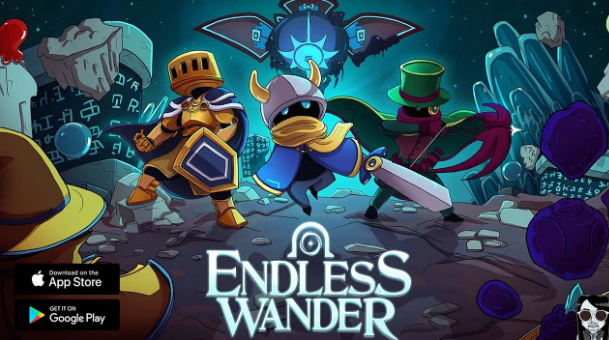
If you like mobile games that look simple at first but slowly pull you into “just one more run” territory, Endless Wander Roguelike RPG is exactly that kind of game. It has the pixel art charm, the fast real-time combat, the random dungeon feeling, and the constant upgrade chase that makes roguelikes so addictive. You step into the role of Novu, enter dangerous portals, fight through corrupted enemies, collect loot, improve your build, and slowly rebuild momentum after every failed run.
The game is officially described on both the App Store and Google Play as an offline pixel-art roguelike RPG with challenging combat, infinite replayability, and an indie feel. Its store description also frames the story around a mysterious portal reopening, giving Novu a chance to save his sister and rebuild the Wanderer’s Guild. That setup explains why the game works well on mobile: it gives you quick runs when you have a few minutes, but still has enough progression to keep you coming back.
What makes Endless Wander stand out in 2026 is that it does not feel like a lazy auto-battler wearing a roguelike skin. You actually have to dodge, read enemy attacks, choose upgrades carefully, and understand when a run is worth pushing or when it is smarter to reset. The game has also continued receiving updates, with Google Play showing “Chapter 3 is here” and user-facing update text mentioning added gameplay features. So this guide is not just a basic beginner introduction. It is a full player-style walkthrough for progression, builds, bosses, resources, corruption mechanics, community tips, and long-term account value.
I. Introduction to Endless Wander: Roguelike RPG
Endless Wander is a top-down action roguelike RPG built around short dungeon runs, real-time combat, randomized upgrades, and permanent progression. You go into runs, fight enemies, collect rewards, make build choices, and either clear the stage or get sent back stronger and wiser. The “roguelike” part comes from the repeat-run structure and changing dungeon experience, while the “RPG” side comes from character growth, equipment, unlocks, and build planning.
The reason it is gaining popularity in 2026 is pretty easy to understand. A lot of mobile RPGs either lean too heavily into auto-play or drown you in menus. Endless Wander feels more direct. You move, dodge, attack, pick upgrades, and survive. It is also offline-friendly, which is a huge advantage for players who want something they can play on commutes, breaks, or low-signal situations without being forced online all the time.
The offline pixel-art experience is one of its biggest selling points. The art has that retro action-RPG feel, but the combat rhythm is modern enough that it does not feel stiff. You can tell the game wants you to learn patterns instead of just overpowering everything with stats. That is why a good guide matters: once difficulty rises, bad habits get punished quickly.
II. Core Gameplay Mechanics
The core combat is real-time, so dodging matters as much as attacking. You cannot just stand still and trade hits forever. Enemy projectiles, melee swings, elite attacks, and boss patterns all force you to move. The better you get at dodging, the less you need to rely on defensive stats, and the more aggressive your build can become.
Randomized dungeon runs are the heart of the loop. Each run gives you different upgrade choices, enemy groups, room layouts, and reward opportunities. While Endless Wander is not always “permadeath” in the harsh old-school sense where everything is wiped forever, failed runs still matter because they cut your current momentum and force you to rebuild. You keep long-term progression, but you still need to respect each run.
Procedural generation keeps the game from becoming fully memorized, but enemy pattern recognition is still the real skill. The map may change, yet enemy behavior follows logic. Once you know which monsters rush, which ones shoot, which ones explode, and which ones delay their attack, you start clearing rooms with fewer mistakes.
Resource management also matters. Loot drops, gold, upgrade materials, equipment, consumables, and permanent upgrade currency should not be spent randomly. If you upgrade everything equally, your account feels weak everywhere. If you focus on a clear build direction, progression feels much smoother.
III. Character Progression and Leveling
Leveling up characters gives you the basic power needed to survive harder areas, but stat allocation is where your playstyle begins to show. If you get hit often, health and defense are not embarrassing choices. If you dodge well, attack, crit, skill damage, or cooldown-focused upgrades may feel better. I would rather build around my actual skill level than copy a glass-cannon setup and die every two rooms.
Unlocking new abilities and skill trees is where Endless Wander starts opening up. Early skills usually teach you the basics, while later upgrades let you lean into burst damage, survivability, elemental effects, or mobility. Do not judge a skill only by its raw damage number. Some skills are strong because they hit safely, control space, or help you survive messy rooms.
Permanent upgrades are your safety net. Even when a run fails, you should come out with something: knowledge, materials, gold, or account growth. Equipment tier progression also matters because higher-tier gear can completely change how hard a stage feels. A difficult boss may become manageable once your weapon and armor stop lagging behind.
Weapon mastery and armor set bonuses should be treated as long-term goals. A random rare item may be strong temporarily, but a full set bonus or weapon style that matches your build can outperform scattered stats. If your build focuses on fast attacks, do not blindly equip slow heavy gear just because the rarity color looks better.
IV. Classes and Build Optimization
For beginners, the best class or build is usually the one with forgiving damage windows and decent survivability. In many roguelike RPGs, players want to start with the flashiest DPS setup, but that often leads to frustration. In Endless Wander, learning dodge timing and enemy patterns is easier when your build gives you room for mistakes.
A warrior-style build is usually the most beginner-friendly idea: solid HP, stable melee damage, and enough durability to survive bad positioning. A mage-style build is better for players who like range, burst, and elemental effects, but it often requires better spacing. A rogue-style build rewards speed, crits, dodging, and aggressive movement, but it can feel punishing if you get greedy.
Hybrid builds are great for real progression because they balance survival and damage. A pure tank build can be safe but slow. A pure DPS build can clear fast but may collapse in boss rooms. For most F2P players, I recommend a hybrid setup first: enough damage to avoid long fights, enough defense to survive mistakes, and enough mobility to dodge danger.
Endgame meta builds usually depend on the current patch, available gear, and corruption level. Community discussions show that higher difficulty can feel much harder if gear quality is behind, with some players specifically mentioning that weak or common gear makes high-tier modes feel like a slog. That matches my own rule for roguelikes: mechanics matter, but gear gaps eventually become real.
V. Items, Equipment, and Crafting
The best weapons are not always the rarest-looking ones. A weapon is good if it matches your movement, attack rhythm, and upgrade choices. Fast weapons feel great for players who like constant pressure. Heavy weapons can hit harder but punish missed attacks. Ranged or magic-style options usually give safer positioning but may require better cooldown management.
Legendary item drops are exciting, but rare loot farming should be patient. Do not expect every run to hand you perfect gear. The better approach is to farm consistently, keep useful pieces, and slowly replace weak slots. If a piece has strong stats for your build, do not throw it away just because another item has a higher rarity label.
Crafting and upgrade materials should be saved for gear you will actually use. One of the biggest mistakes in games like this is upgrading every new item immediately. Early upgrades are cheap enough, but later costs add up. Before spending, ask yourself: does this item fit my build, or am I only upgrading because it is new?
Consumables are there to be used, but not wasted. Healing items, buffs, and emergency tools should be saved for elite rooms, bosses, or deep-run situations. If you burn everything in easy rooms, you will regret it when the boss starts throwing patterns you are still learning.
VI. Areas, Locations, and Chapter Progression
Chapter 1, especially the temple-style early area, is where you should learn fundamentals. Do not rush it like a tutorial you have already mastered. Watch enemy wind-ups, learn room spacing, test skills, and practice dodging before difficulty ramps up. The first chapter is not only about clearing; it is about building habits.
Chapter 2 usually starts testing whether you can handle more complicated threats. Enemies become less forgiving, and hidden secrets or side paths become more worth exploring. If you are dying often here, do not assume your class is bad. Check your gear, upgrade priorities, and whether you are taking unnecessary damage in normal rooms.
Chapter 3 is a major progression point because current store information specifically highlights that Chapter 3 has arrived. This is where corruption-related progression and higher difficulty optimization become more important. You should start thinking beyond simple survival and begin planning around build synergy, gear sets, and reward efficiency.
The best farming locations are usually the ones you can clear quickly and safely. A harder region is not always better if it takes too long or kills you too often. Efficient farming means balancing reward quality with clear consistency.
VII. Enemies, Bosses, and Difficulty Scaling
Boss pattern memorization is one of the most important skills in Endless Wander. Every boss has tells. Maybe it pauses before a dash, raises a weapon before a slam, charges before firing a beam, or summons adds before entering a stronger phase. Once you stop panicking and start reading patterns, boss fights become much more manageable.
Elite enemies are dangerous because they compress boss-like pressure into regular rooms. Do not treat them like normal mobs. Clear smaller enemies first if they clutter the room, then focus on the elite. If the elite has a dangerous projectile or area attack, keep moving instead of trying to face-tank.
Weakness exploitation depends on your build and available elements. If an enemy type clearly struggles against certain damage patterns, remember it. The game rewards players who adapt. A build that feels great in one biome may feel weaker in another if enemies resist your main damage style or force awkward movement.
Boss loot rewards are one reason to farm harder fights, but difficulty scaling means you should not push too far too soon. Endgame bosses and miniboss farming are best approached when your gear, upgrades, and player skill are ready. If every fight feels like a coin flip, farm slightly easier content until your build stabilizes.
VIII. Systems and Features Breakdown
Offline play is one of Endless Wander’s best features. Being able to play without constant internet makes the game feel more respectful of real life. You can run dungeons during downtime, keep progressing, and enjoy the game without treating it like a live-service checklist.
Auto-save and checkpoint-style progression help make mobile play more practical. Even if you are interrupted, the game is built around short-session friendliness. That is important because roguelikes can feel frustrating if one interruption ruins everything.
Daily challenges, achievements, and leaderboards give players extra reasons to return beyond normal chapter clearing. Even if you are not a leaderboard grinder, these systems can guide your goals and reward experimentation.
Seasonal events and updates also matter. App Store text currently mentions a pets update with new companions and Elemental Convergences, while Google Play highlights newer chapter content. That tells me the game is still expanding, so players should expect builds and priorities to shift as new systems arrive.
IX. Tips and Tricks for Success
To beat the first boss efficiently, stop rushing your attacks. Most early deaths happen because players attack one extra time instead of dodging. Hit during safe windows, move away when the boss starts an animation, and do not waste healing before you understand the pattern.
The fastest leveling route is usually the highest area you can clear consistently, not the hardest area you can barely survive. If a stage gives better rewards but takes twice as long and kills you often, it is worse for farming. Pick consistency first, then increase difficulty.
The best starting class or build is the one that teaches you the game without punishing every mistake. A balanced melee or hybrid build is usually better for early learning than a fragile crit build. Once you understand enemy behavior, you can switch into riskier setups.
To maximize gold per run, explore efficiently, prioritize reward rooms, avoid unnecessary damage, and do not spend resources on gear you will replace immediately. Secret unlockables are often tied to exploration and repeated clears, so do not only rush the main path every time.
X. Advanced Strategies and Corruption Mechanics
Corruption level is one of the systems players discuss after clearing major content. Community posts show players asking how to increase corruption after finishing Chapter 3, with one answer saying that completing fractures on higher corruption levels increases corruption level. In simple terms, corruption is the game’s way of giving you harder content and better reasons to keep improving.
Increasing corruption can improve the reward chase, but it also makes enemies more punishing. Do not raise difficulty just because you can. Raise it when your build clears the current level comfortably. If you are barely surviving normal rooms, higher corruption will probably slow your farming instead of improving it.
Knowing when to retreat or reset a run is part of advanced play. If your upgrades are terrible, your health is low, and your consumables are gone before the boss, pushing forward may waste time. Sometimes the smartest move is to reset, farm easier content, or adjust your build.
Enemy spawn rates and map exploration matter because more enemies usually mean more rewards but also more risk. Full-clearing can be good when your build is strong. If your build is weak, rushing key rooms may be safer. Biome-specific enemies also force adaptation, so do not use the exact same strategy everywhere.
XI. F2P vs. Premium: Is Spending Worth It?
Endless Wander is very playable as a free-to-play game, especially because its core appeal comes from skill-based runs rather than pure spending. You can improve by learning patterns, farming materials, upgrading gear, and choosing better builds. That is good news for players who do not want to pay.
The limitation of F2P is usually speed. Paid options, if available in your version, may reduce grind, unlock convenience, or help you progress faster. But spending does not replace dodging, positioning, or build knowledge. A paid player can still die if they face-tank boss patterns.
The best real-money investments are usually permanent value or convenience, not random short-term boosts. Avoid pay-to-win traps by asking whether the purchase helps long-term progression or only gives a temporary bump. If you are F2P, focus on daily consistency, smart upgrades, and farming content you can clear reliably.
Maximizing account value without spending comes down to patience. Build one strong setup first, then branch out. Do not spread resources across every weapon, every class, and every armor piece at once.
XII. Community and Meta Discussions
The Endless Wander community is still small compared with giant mobile RPGs, but that can actually be a good thing. Reddit posts, YouTube videos, and player discussions often feel more direct because people are sharing real problems: corruption levels, armor stats, hard bosses, and build walls.
Reddit is useful for specific questions. The r/endlesswander community has posts about corruption levels, best armor stats, set bonuses, and difficulty walls. These discussions are helpful because they show where players actually get stuck, not just what a generic guide assumes.
YouTube guides are better when you want to see movement, boss patterns, or build performance in action. Written advice can explain what to do, but video shows timing. Influencer tips are useful, but always check whether their account has better gear than yours. A build that looks easy in a video may require upgrades you do not have yet.
Controversial meta debates usually come from different player goals. One player may value dodge. Another may value damage. Another may prefer pets, elemental setups, or set bonuses. Instead of copying blindly, ask why a build works.
XIII. Patch Notes and Future Updates
Recent update information points toward Chapter 3, pets, Elemental Convergences, and new gameplay features, depending on platform listing. That means the game is not frozen. Any build guide can age if new systems change how damage, companions, or upgrades work.
New classes, items, areas, and balance changes would all shift the meta. If a new companion boosts elemental damage, mage-style builds may rise. If a new armor set improves dodge or survivability, high-corruption strategies may change. If a new chapter adds enemy types resistant to certain attacks, old builds may need adjustment.
My prediction is that future meta shifts will reward flexible builds. Pure damage will always look attractive, but as more content arrives, survival, mobility, pets, elemental synergy, and set bonuses will likely become more important. The deeper the game gets, the less one-dimensional builds can dominate everything.
XIV. Comparisons to Similar Roguelikes
Compared with many mobile roguelikes, Endless Wander feels more like a compact action RPG than a pure bullet-hell survival game. Some mobile roguelikes overwhelm the screen with enemies and upgrades until the player mostly watches numbers happen. Endless Wander keeps the player more involved through movement, dodging, and direct combat decisions.
Its unique selling point is the mix of offline play, pixel art, skill-based action, and progression. It has that indie soul feeling because it does not rely only on flashy banners or endless monetization pop-ups. The store pages specifically highlight offline replayability and pixel-art action, which is still one of its strongest identity points.
The pixel art gives it a retro look, but the combat pacing makes it feel modern. It reminds me of the reason people still like old-school action RPGs: clear movement, readable attacks, and satisfying upgrades. The replayability comes from combining random runs with long-term growth.
XV. SEO and Keyword Integration Strategy
For the keyword Endless Wander Roguelike RPG, strong related keywords include Endless Wander guide, Endless Wander builds, Endless Wander best class, Endless Wander corruption level, Endless Wander Chapter 3, Endless Wander boss guide, Endless Wander tips, offline roguelike RPG, pixel art roguelike, mobile roguelike RPG, and best roguelike RPG 2026.
Semantic keyword placement should feel natural. Use the main keyword in the title, introduction, one or two headings, and conclusion. Then use related terms in sections about builds, progression, bosses, corruption, and equipment. The goal is to help readers and search engines understand the topic without making the article sound repetitive.
Avoid keyword stuffing by writing like a real player. Nobody wants to read the same phrase ten times in one paragraph. A strong article naturally mentions the game, its systems, its classes, its chapters, and its strategies because those are the things players actually search for.
XVI. Content Optimization for Search Engines
A strong meta title could be: Endless Wander Roguelike RPG Guide 2026: Best Builds, Boss Tips, and Progression Strategy. It includes the main keyword, year, and the core search intent.
A good meta description could be: Learn how to progress in Endless Wander Roguelike RPG with beginner tips, best builds, boss strategies, corruption mechanics, gear upgrades, F2P advice, and Chapter 3 guidance.
Image alt text should describe the image clearly. Good examples include “Endless Wander Roguelike RPG pixel art combat,” “Endless Wander best beginner build,” “Endless Wander Chapter 3 boss fight,” and “Endless Wander corruption level guide.” Internal links can point to separate guides about best builds, boss patterns, gear farming, corruption levels, pets, elemental convergence, and F2P progression.
FAQ schema should target real player questions like “Is Endless Wander playable offline?”, “What is the best beginner build in Endless Wander?”, “How do corruption levels work?”, “How do I beat the first boss?”, and “Is Endless Wander free-to-play friendly?”
Endless Wander Roguelike RPG deserves attention because it understands what makes a mobile roguelike fun: fast runs, real control, meaningful upgrades, and enough challenge to make every clear feel earned. It is not the kind of game where you simply auto-battle through everything and collect rewards. You actually have to learn.
If you are new, start with a balanced build, focus on survivability first, learn enemy patterns, and do not waste resources on every shiny item. If you are already pushing Chapter 3 or corruption levels, start optimizing gear, pets, set bonuses, and elemental synergies. The game gets much better once you stop treating each run as random chaos and start reading it like a puzzle.
My final advice is simple: play patiently, upgrade with purpose, and let every failed run teach you something. Download it, test different builds, join the community discussions, and leave useful feedback if you enjoy it. In 2026, Endless Wander is one of those indie-style mobile roguelikes that rewards players who pay attention, and that is exactly why it is worth mastering.